Pine whitepaper
Park model RV, tiny home, or mobile cabin: what's the difference?
A manufacturer’s plain-language guide to three categories buyers constantly blur, the park model RV, the tiny home, and a mobile cabin, across classification, titling, size, four-season readiness, permitting, financing, intended use, and mobility.
The short answer, then the real one
The confusion is understandable, because the three words describe different things. A park model RV is a titling class: a recreational vehicle on a single chassis, under 400 square feet, titled as a vehicle for recreation, camping, or seasonal use. A tiny home is a lifestyle and a size, usually built and sold as a full-time residence, with a classification that changes depending on how it is built. A mobile cabin like Pine’s is a park model RV cabin built and titled specifically for outdoor-hospitality operators, delivered finished and set guest-ready. So two of the three terms name a legal category, and the middle one mostly names an intended way of living.
"Park model RV" names how a structure is titled (a vehicle, personal property, seasonal or recreational use). "Tiny home" names how it is meant to be lived in (usually a full-time residence), and its title varies with how it is built. A Pine mobile cabin is a park model RV, titled as a vehicle, built for hosting guests rather than for full-time residence.
That is the short answer. The real one is that classification and titling drive almost every practical difference downstream, from what you can build without a construction season, to how it finances, to whether you can move it later. Below we define the three categories precisely, walk the dimensions that actually decide between them, and lay all three side by side in a table you can hand to whoever signs off on the money. We build in the park model RV category, so read the rest knowing that; part of why we can be straight about the boundaries is that buyers reach us after getting tangled in exactly this vocabulary.
Three categories people blur together
Start with what each one actually is, because most of the bad decisions here trace back to loose vocabulary. A park model RV is a recreational vehicle. The motor-vehicle administrators who title these define it as a recreational vehicle built on a single chassis, mounted on wheels, primarily designed to provide temporary living quarters for recreation, camping, or seasonal use, with a gross area not exceeding 400 square feet in the set-up mode.[1] The recreational-vehicle fire and life-safety standard describes the same category in the same terms.[2] The key fact is not the square footage, it is that the structure is titled as a vehicle, not as a house.
A tiny home is not a legal classification at all, which is the single most important thing to understand about it. It is a description of size and, more than that, of intent: a small structure built to be lived in full time. How a given tiny home is titled and regulated depends entirely on how it is built. A tiny house on wheels is frequently titled as a recreational vehicle, which puts it back in the park model RV family for titling purposes. A tiny house on a foundation is real property, a dwelling regulated under the residential building code, which in most of the country is the International Residential Code, the model code for one- and two-family dwellings.[4] Same two words, two completely different legal animals, and a local authority decides which one is in front of it.
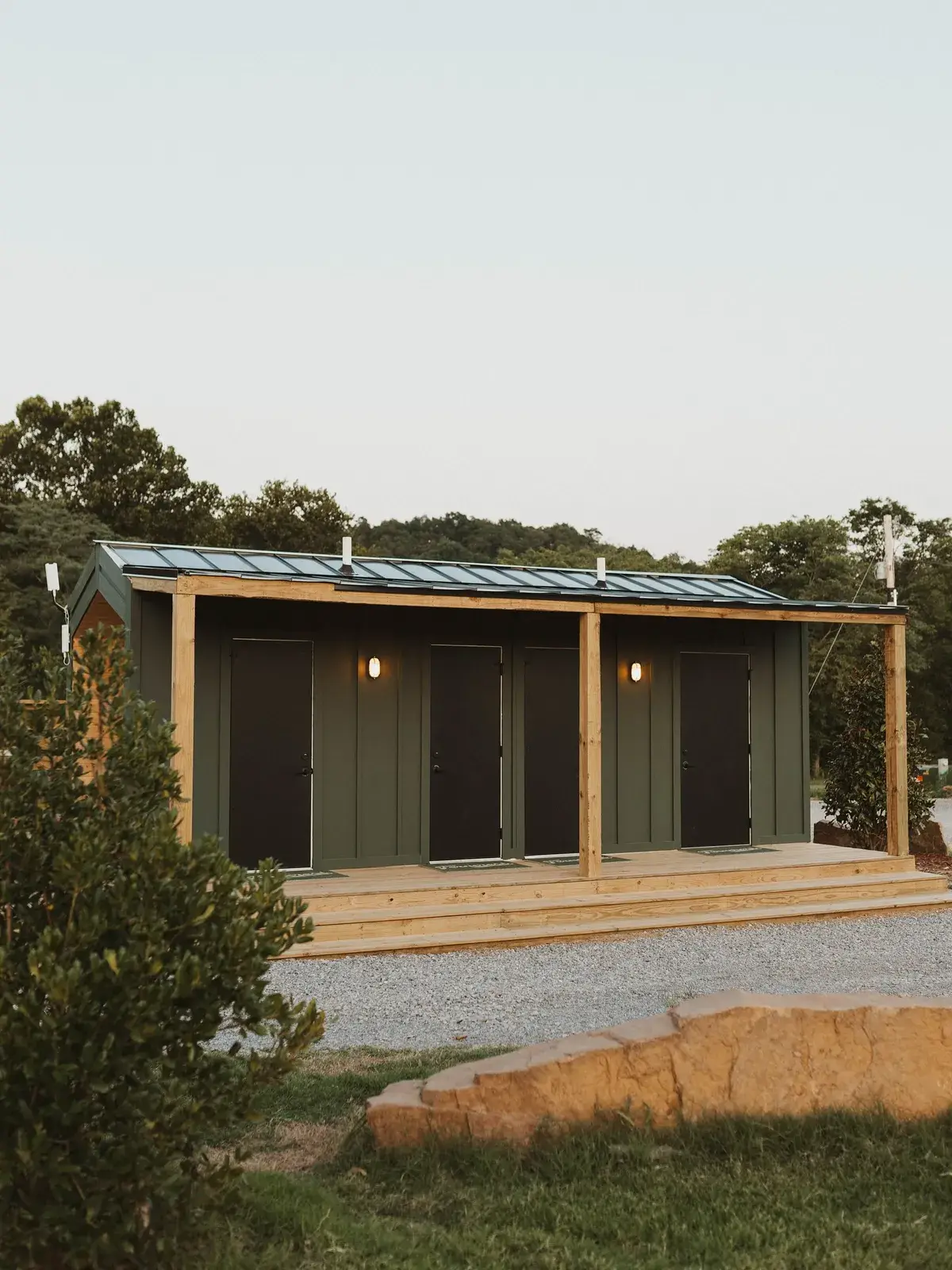
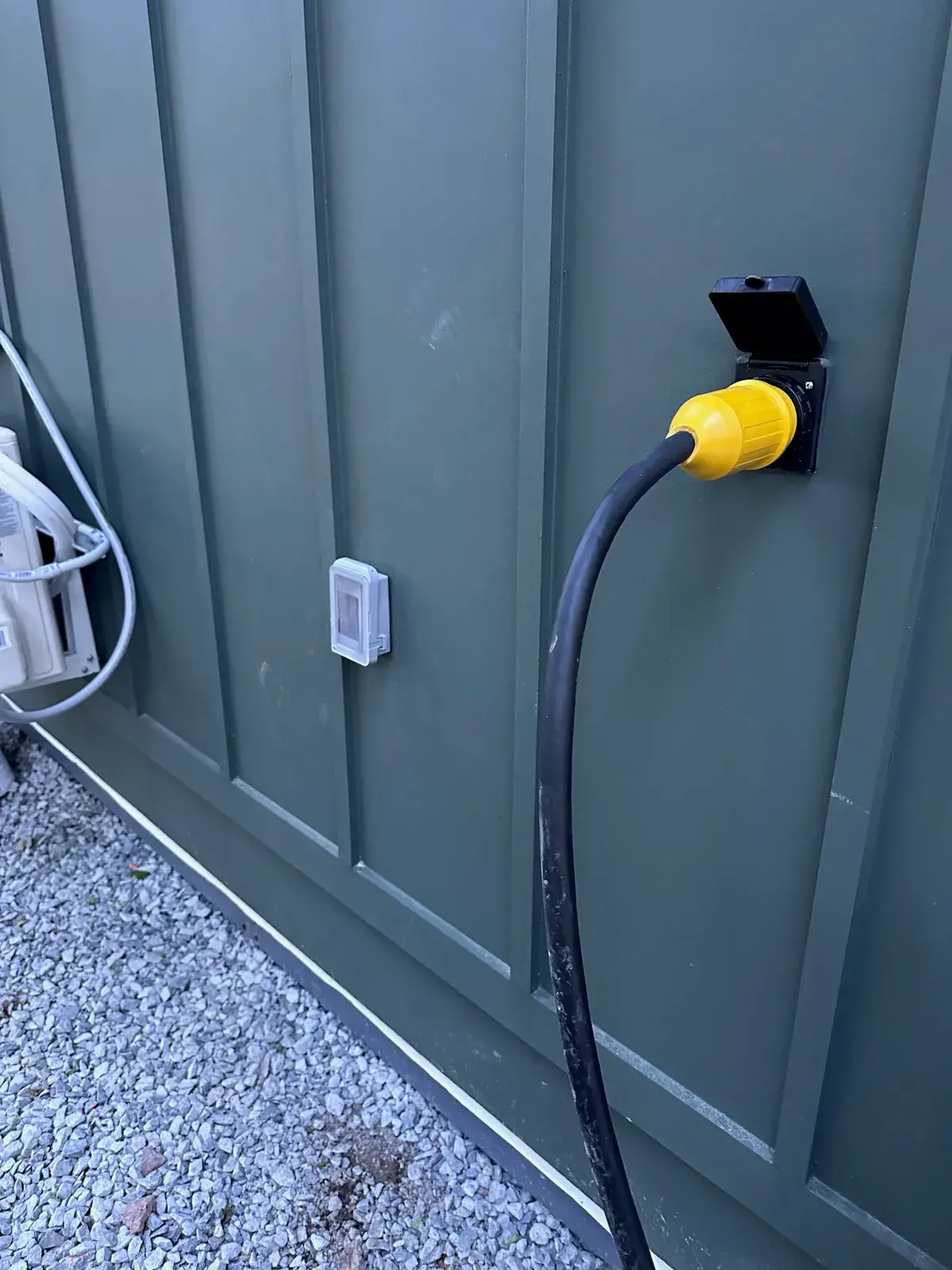
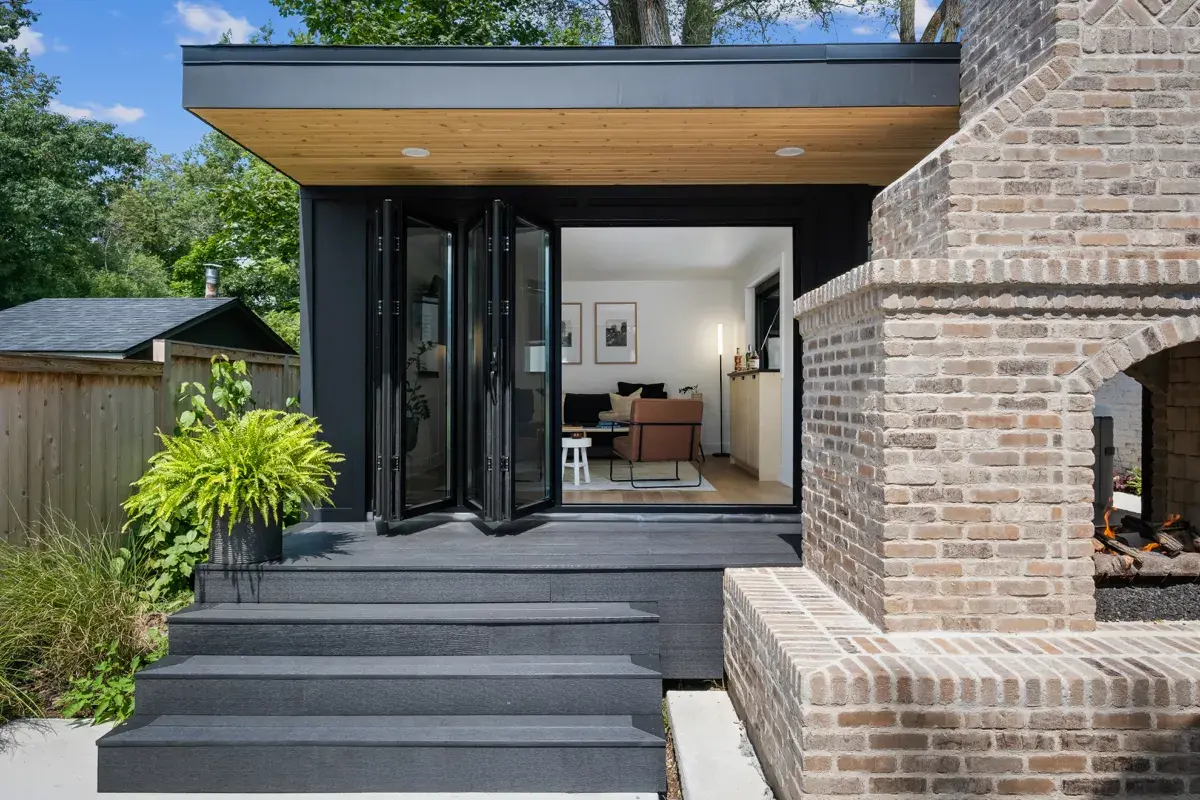
A mobile cabin, as Pine builds it, is a park model RV cabin, so it lives inside the first category, not a fourth one. It is a titled RV asset on a steel chassis, kept under 400 square feet, that connects through standard RV-style power, water, and sewer connections and needs no foundation. What sets it apart from a park model bought off a dealer lot is the purpose it is built and titled for, and the way it arrives, both of which the sections below get to. To keep the housing-versus-vehicle line clear: federal housing policy regulates manufactured homes to a national construction standard and expressly exempts recreational vehicles from it,[3] and a park model RV, a Pine mobile cabin included, sits on the vehicle side of that exemption.
Classification and titling: the line under everything
If you remember one thing from this guide, make it this: the category a structure falls into is decided by how it is titled, and how it is titled decides nearly everything else. A park model RV is titled as a vehicle, which is personal property. A tiny home on a foundation is real property. A tiny home on wheels is usually titled as a vehicle, though not always, and the ambiguity is exactly why it causes trouble at the permitting counter. A Pine mobile cabin is a titled RV asset, personal property, built and titled as movable equipment on a steel chassis.
This is also where we have to be precise about what we are and are not claiming. The park model RV category, as the motor-vehicle and fire-safety authorities define it, is tied to a manufacturer’s certification to the park model standard.[1] We cite that only to draw the boundary of the category, not to place Pine inside a certification we do not hold. Pine spaces are built and titled as movable equipment; they are not RVIA or ANSI certified, and we never describe them that way. What we can say plainly is what the title documents say: a titled RV asset on a steel chassis, delivered as mobile equipment. Everything in the comparison below follows from that single line, so confirm the classification your own jurisdiction and lender will apply before you commit to any of the three.
Size, and whether it holds up in winter
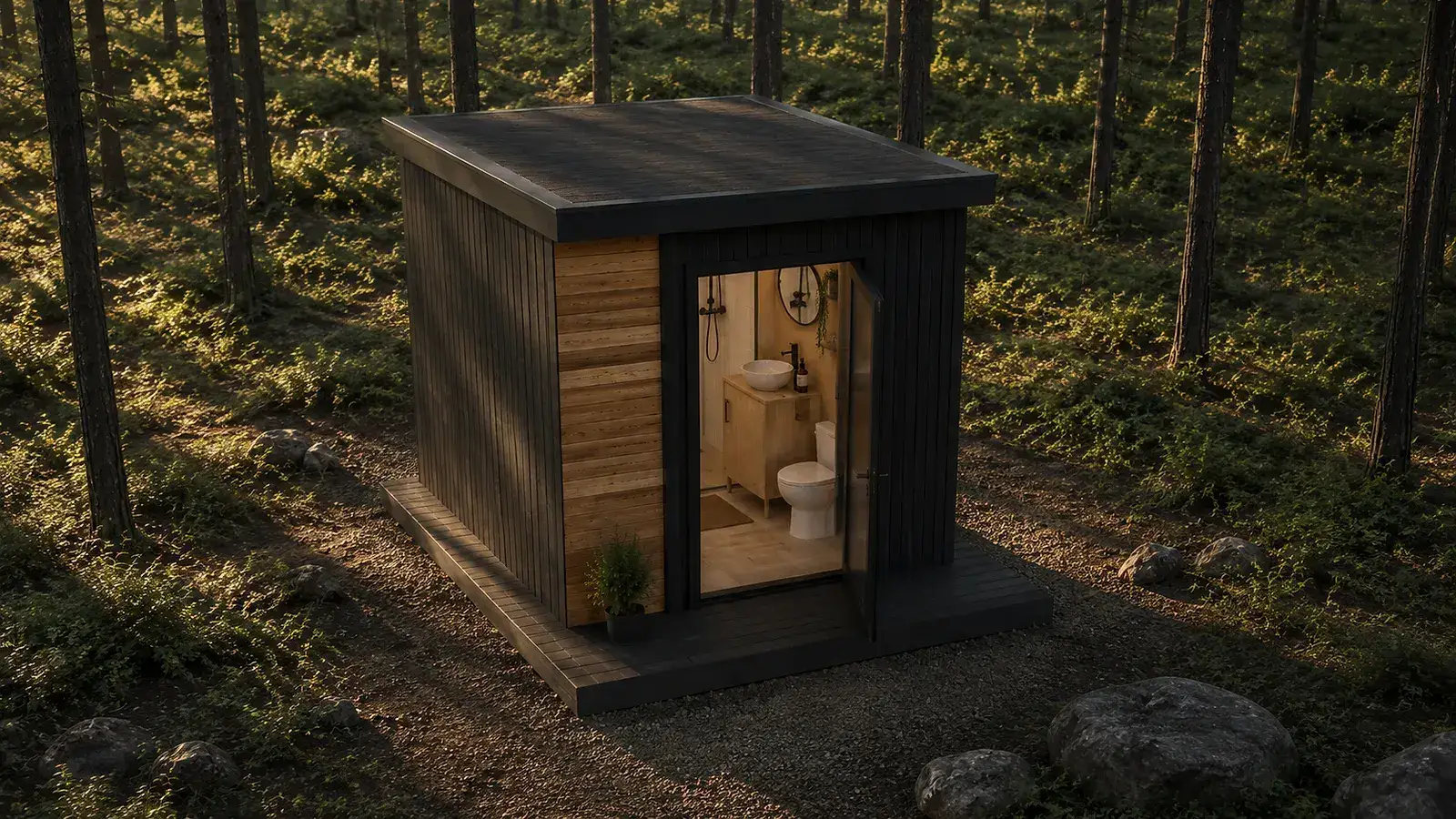
On size, the three categories overlap more than the marketing suggests. A park model RV is capped at 400 square feet in the set-up mode by the category definition itself.[1] Most tiny homes land under that same ceiling, since the whole point of a tiny home is that it is small; a tiny house on a foundation can be larger, but then it is simply a small house under the residential code. Pine’s cabins sit deliberately below the ceiling: our footprints run from a compact space that pairs with a shared bathhouse up to a larger cabin with a private bath and kitchenette. The specific footprints and finishes live on the mobile cabin lineup, and the honest note is that square footage is a category boundary, not a quality signal. A well-planned 200-square-foot cabin hosts better than a poorly planned 380.
Four-season readiness is where category labels mislead people most, so treat it as a build question, not a category question. Nothing about the words "park model RV" or "tiny home" tells you whether a structure survives a January in the upper Midwest. What tells you is the build: insulation values, window quality, plumbing that is protected and heat-traced against freezing, and heating sized to the actual climate. We have seen structures in every one of these categories built for mild use and struggle in a real winter, and others built to run year-round without drama. Pine builds and insulates its cabins for four-season operation, and a connected thermostat is standard so an operator can hold temperature and catch a cold-weather problem from anywhere, which we cover on the hardware and network page. Whichever category you shop, press the vendor for the insulation and plumbing specifics rather than accepting a "four-season" label on the brochure.
Permitting, financing, and insurance follow the title
Once you accept that titling drives the category, the practical consequences line up predictably. On permitting, a titled RV asset, whether you call it a park model RV or a Pine mobile cabin, generally does not need a building permit for the structure itself, because it is not classified as a dwelling. What it does need is placement approval: your township or county still governs zoning, setbacks, density, and how it connects to power, water, and waste. A tiny home on a foundation is the opposite, a regulated dwelling that pulls a full building permit, plan review, and staged inspections under the residential code.[4] A tiny home on wheels usually follows the RV path, but only if your jurisdiction agrees it is an RV, which is the gray area to resolve up front. We wrote a companion guide on park model versus site-built that walks the permitting fork in more detail.
On financing and insurance, the title again decides the lane. A vehicle-titled structure is personal property, financed and insured more like a vehicle or a piece of equipment than like a house. A foundation-built dwelling is real property, financed with a mortgage and insured as a building. The Consumer Financial Protection Bureau documented how consequential that split is in the closely related manufactured-home market: whether a home is titled as personal property or real property drives the financing available, and personal-property loans carried shorter terms and materially higher rates than real-property mortgages on otherwise comparable homes.[5] We cite that to show the mechanism, not to predict your terms, which depend on your lender, your credit, and your structure. This is squarely a question for your own advisors. Pine does not provide tax, legal, or investment advice, and the honest move is to take the titling distinction to the people who do.
Dwelling register versus hospitality register
The difference that copy rarely states out loud is who each category is built for. A tiny home carries a full-time-dwelling register. It is designed, sold, and most often occupied as someone’s residence, and much of the tiny-home world is about living smaller, not about hosting paying guests. That intent shows up in the fixtures, the storage, the emphasis on year-round livability for one household, and often in a level of owner customization that makes each one a little different.
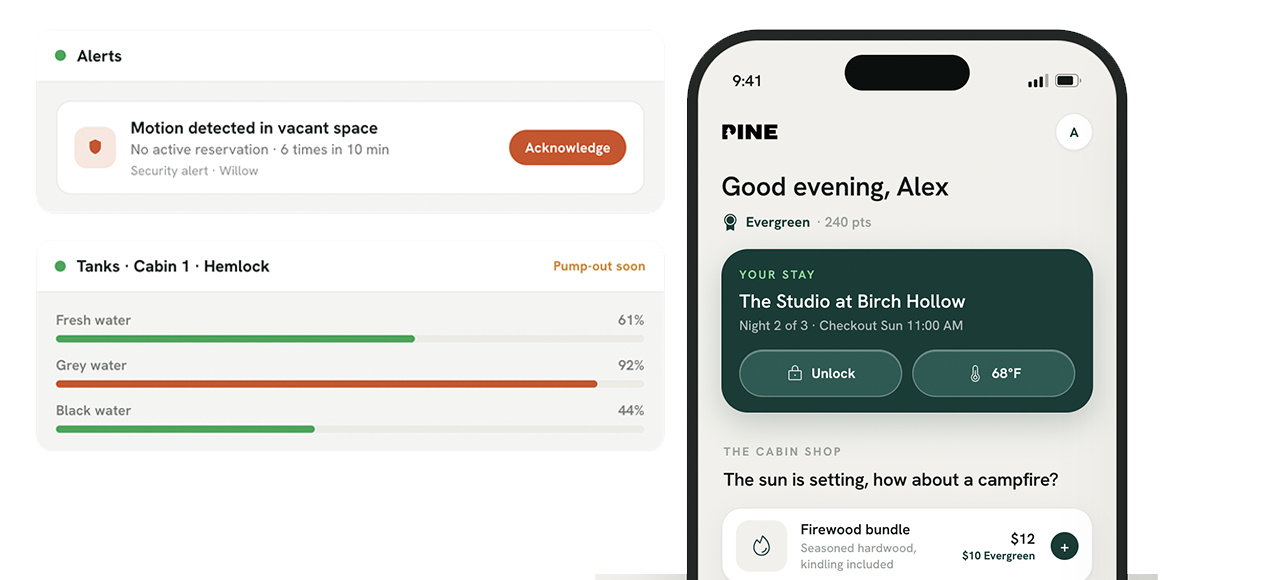
A park model RV carries a recreational and seasonal register by definition, and within that category most park models are still sold for a single owner’s seasonal use in an RV resort. A Pine mobile cabin is a park model RV built for a third register the other two do not center: outdoor hospitality, an operator hosting a rotation of guests. That intent changes the build in ways that matter for a business. Durable, guest-proof finishes. A layout that reads as lodging rather than as a residence. Technology built in to run the physical space across many stays, not bolted on for one owner, which is what our Innkeeper software is for. If you are buying a place to live, the dwelling register is the right one. If you are building rentable capacity, the hospitality register is, and that is the gap a mobile cabin is built to fill. Operators approaching this from a working campground can start at campgrounds and resorts, and first-time hosts on raw land at landowners and new operators.
Mobility, and whether you can undo the decision
All three categories can, in principle, be moved, but the practical mobility differs, and it is worth being honest about. A tiny home on a foundation does not move; it is real property and stays where you built it. A tiny home on wheels and a park model RV both stay on their chassis and can be relocated, which keeps the placement decision reversible in a way a foundation never is. That reversibility is not a small thing for an operator: it means you can reposition a cabin as you learn which part of your property guests actually book, add capacity when demand proves out, or, across a portfolio, move inventory to where the season is, a question we take up for funds and hospitality groups.
Mobility comes with real logistics, and we will not pretend otherwise. Anything wider than 8.5 feet is an oversize load on public roads and moves under a transport permit, and at greater widths the states require escort vehicles. That is true of a wide park model, a wide tiny home on wheels, and our wider cabins alike. The distinction that matters is not that moving is effortless, it is that moving is possible: a foundation is a one-way door, and a titled asset on a steel chassis is not. With a Pine cabin the transport is handled as part of delivery, so the reversibility is real without the operator having to become a heavy-haul expert.
The three categories, side by side
Here are the three across the dimensions that actually decide between them. The rows most likely to vary locally are classification, permitting, financing, and full-time-use rules; confirm those against your own jurisdiction, lender, and advisors. "Tiny home" is split where its answer depends on how the structure is built.
| Dimension | Park model RV | Tiny home | Pine mobile cabin |
|---|---|---|---|
| What the term names | A titling class (a recreational vehicle) | A size and a lifestyle, not a legal class | A park model RV cabin built for hospitality |
| How it is titled | Vehicle, personal property | RV if on wheels; real property if on a foundation | Titled RV asset, personal property (movable equipment) |
| Typical size | Up to 400 sq ft in set-up mode | Usually under 400 sq ft; larger if a small house | Under 400 sq ft; footprints from compact to a private-bath cabin |
| Four-season readiness | Depends on the build, not the category | Depends on the build, not the category | Built and insulated for four-season use; connected thermostat standard |
| Permitting for the structure | No building permit for the structure; placement approval applies | Full building permit if a dwelling; RV path if titled as an RV | No building permit for the structure; placement approval applies |
| Financing and insurance | Personal-property terms | Personal-property or real-estate terms, depending on title | Personal-property terms; confirm with your lender |
| Intended use | Recreational, seasonal, usually owner-occupied | Full-time residence for one household | Outdoor hospitality: hosting a rotation of guests |
| Delivery and setup | Bought off a lot, placed by the buyer | Built to order; setup varies widely | Delivered finished and set guest-ready by Pine |
| Technology | Added aftermarket, if at all | Added aftermarket, if at all | Built in (smart locks, sensors, monitoring) |
| Mobility | Relocatable; oversize transport if wide | Relocatable on wheels; fixed on a foundation | Relocatable; oversize transport handled in delivery |
Read down the "Tiny home" column and the pattern is clear: it is the category whose answers keep branching, because the word does not fix a legal class. Read down the other two and the answers hold steady, because a title does fix one.
Where a mobile cabin fits, and how to choose
Choosing between the three is easier once you ask what you are actually buying. If you are buying a place to live full time, you are shopping for a tiny home, and the right questions are about year-round livability and how your jurisdiction will classify and permit it. If you are buying a seasonal retreat for your own use in an RV community, a park model RV off a dealer lot is a reasonable fit. If you are building rentable capacity, a business that hosts guests and earns, the honest recommendation is the hospitality-built version of the park model RV category: a mobile cabin, titled as a movable RV asset, delivered finished, built for the wear of a rotation of guests, with the technology to run it already inside.
That is where a Pine cabin sits, stated plainly so you can weigh it rather than take it on faith. It keeps the honest advantages of the park model RV category, titled and movable, no foundation, no building permit for the structure, and changes the path around it: delivered and set guest-ready, built for outdoor hospitality rather than owner-occupancy, technology built in. It is not certified, and we do not say it is; it is built and titled as movable equipment on a steel chassis. If you want the category comparison against a foundation-built cabin instead, that lives in park model versus site-built, and if the question you actually have is what capacity costs to add, our guide on what it costs to add cabins to a campground lays out the line items.
Working through this for a specific property? The park model comparison page shows how Pine positions within the category, the mobile cabin lineup has the footprints and finishes, and when you want a real number for a real configuration, Build & Price shows transparent, distance-based delivery for your site.
Frequently asked questions
- What is the difference between a park model RV and a tiny home?
- A park model RV is a recreational vehicle: it is built on a single chassis on wheels, kept under 400 square feet in the set-up mode, and titled as a vehicle for recreation, camping, or seasonal use. A tiny home is a vocabulary word, not a legal class. Most tiny homes are built and marketed as a full-time residence, and depending on how one is built it may be titled as a recreational vehicle, treated as a dwelling under the residential building code, or fall into a gray area your local authority has to rule on. The cleanest way to say it: park model RV names a titling class, while tiny home names a lifestyle and a size. Confirm the actual classification with your jurisdiction, because it drives permitting, financing, and where you are allowed to place the structure.
- Is a Pine mobile cabin a park model RV?
- Yes, in the honest sense that matters. A Pine mobile cabin sits in the park model RV family: it is a titled RV asset on a steel chassis, under 400 square feet, that connects through standard RV-style power, water, and sewer connections and needs no foundation. Where it differs is the path around the structure. It is built and titled for outdoor-hospitality operators rather than for seasonal owner-occupancy, it is delivered finished and set guest-ready rather than bought off a lot and placed by you, and its technology is built in. Pine spaces are built and titled as movable equipment; they are not RVIA or ANSI certified, and we do not describe them that way.
- Can you live in a park model RV or a tiny home full time?
- A tiny home is usually designed and sold as a full-time dwelling, which is a large part of what the term signals. A park model RV is designed and titled for recreational, camping, or seasonal use, and many jurisdictions restrict full-time occupancy of a titled RV outside of licensed communities. Full-time-residence rules are set locally and vary widely, so this is a question for your township or county, not a claim a manufacturer can make for you. Pine builds for hospitality operators hosting guests, not for full-time residence, so the occupancy question rarely applies the way it would for someone buying a home to live in.
- Which one is best for a short-term rental or hospitality business?
- For an operator hosting paying guests, the park model RV path tends to fit best, because it is titled as movable equipment, needs no building permit for the structure itself in most places, and can be earning within days of delivery rather than after a construction season. A tiny home built as a residence carries a full-time-dwelling register and, if it is built to the residential code, the permitting weight that comes with a dwelling. A Pine mobile cabin is a park model RV cabin built specifically for that hospitality use, delivered finished and set guest-ready. Confirm placement and use rules with your local authority before you order anything.
- Are tiny homes and park model RVs built for four seasons?
- It depends entirely on how a given structure is built, not on which category it belongs to. Plenty of tiny homes and park model RVs are built for mild or seasonal use and struggle in a real winter, and plenty are built to run year-round. The things that actually decide it are insulation values, window quality, protected and heat-traced plumbing, and heating sized to the climate. Pine builds and insulates its cabins for four-season operation, with a connected thermostat standard so an operator can hold temperature and watch for a cold-weather problem remotely. Ask any vendor for the specifics rather than the category label.
- How is each one titled and financed?
- A park model RV, including a Pine mobile cabin, is titled as a vehicle, which is personal property, and is financed more like a vehicle or a piece of equipment than like a house. A tiny home’s titling depends on how it is built: a tiny house on wheels is often titled as a recreational vehicle, while a tiny house on a foundation is real property financed as such. The Consumer Financial Protection Bureau has documented, in the closely related manufactured-home market, that personal-property loans tend to carry shorter terms and higher rates than real-property mortgages, so the titling class has real financial consequences. Take the specific classification and financing question to your lender and your own advisors. Pine does not provide tax, legal, or investment advice.
Sources
- Policy position on the recreational park trailer (park model RV) category. American Association of Motor Vehicle Administrators.
- NFPA 1192, Standard on Recreational Vehicles. National Fire Protection Association.
- Office of Manufactured Housing Programs: federal construction standard and the recreational-vehicle exemption. U.S. Department of Housing and Urban Development.
- International Residential Code: the model building code for one- and two-family dwellings. International Code Council.
- Manufactured Housing Finance: New Insights from the Home Mortgage Disclosure Act. Consumer Financial Protection Bureau.
This paper draws on Pine’s experience manufacturing, delivering, and setting titled, movable cabins for hospitality operators, set against the park model RV and tiny home categories as buyers actually encounter them, and against the cited government, standards, and titling sources. Category definitions, code, titling, financing, and occupancy rules are jurisdiction-specific and change; confirm every classification, permit, financing, and full-time-use question with your local authority, your lender, and your own advisors before you commit. Pine does not provide tax, legal, or investment advice.
Working through this for a specific property?
Build & Price