Pine whitepaper
What does it cost to add cabins to a campground?
A Pine whitepaper on the real cost of adding cabins to a campground: why the purchase price is one line on the invoice, and how the total cost of ownership actually breaks down against the site-built path.
The short answer, then the real one
The purchase price of a cabin is one line on the invoice, and treating it as the whole cost is how a campground expansion budget goes wrong. The number that actually governs the decision is total cost of ownership: the cabin, plus delivery and setup, plus utility connections and any platforms and walkways, plus the ongoing technology service layer, set against everything a delivered, titled cabin lets you skip. No foundation. No septic system. No building permit for the structure. No months of on-site construction. That subtraction is usually larger than operators expect, and it is the reason the site-built quote and the delivered quote are not comparable line for line.
Do not compare sticker prices, compare cost structures. The site-built path loads the budget with foundation, septic, permits, and a construction season. The delivered, titled path trades all of that for a distance-based delivery charge and standard utility hookups. The right question is not what the cabin costs, it is what the whole property costs to stand up, and how fast it earns.
Below we separate the two cost structures, itemize the line items that disappear on the delivered path and the ones that appear, lay it all out in a category-by-category table, show how the cabin model you pick moves the number, and close on financing and how to get your actual figure. We do not quote a fixed Pine cabin price on this page, and that is deliberate: delivery is distance-based and utility work is property-specific, so a real number comes from configuring it, not from a brochure.
Two cost structures, not two price tags
An operator pricing new cabins is really choosing between two ways of spending money, and they behave differently. The site-built path is a construction project: a slab or pier foundation, framing and finishing on your property, on-site plumbing and electrical, a septic or sewer tie-in, inspections, and a permit for a permanent structure. Most of that spend is front-loaded into a build season, and the cost of the structure itself is exposed to the same construction inflation that federal price indexes have tracked climbing across recent years.[1]
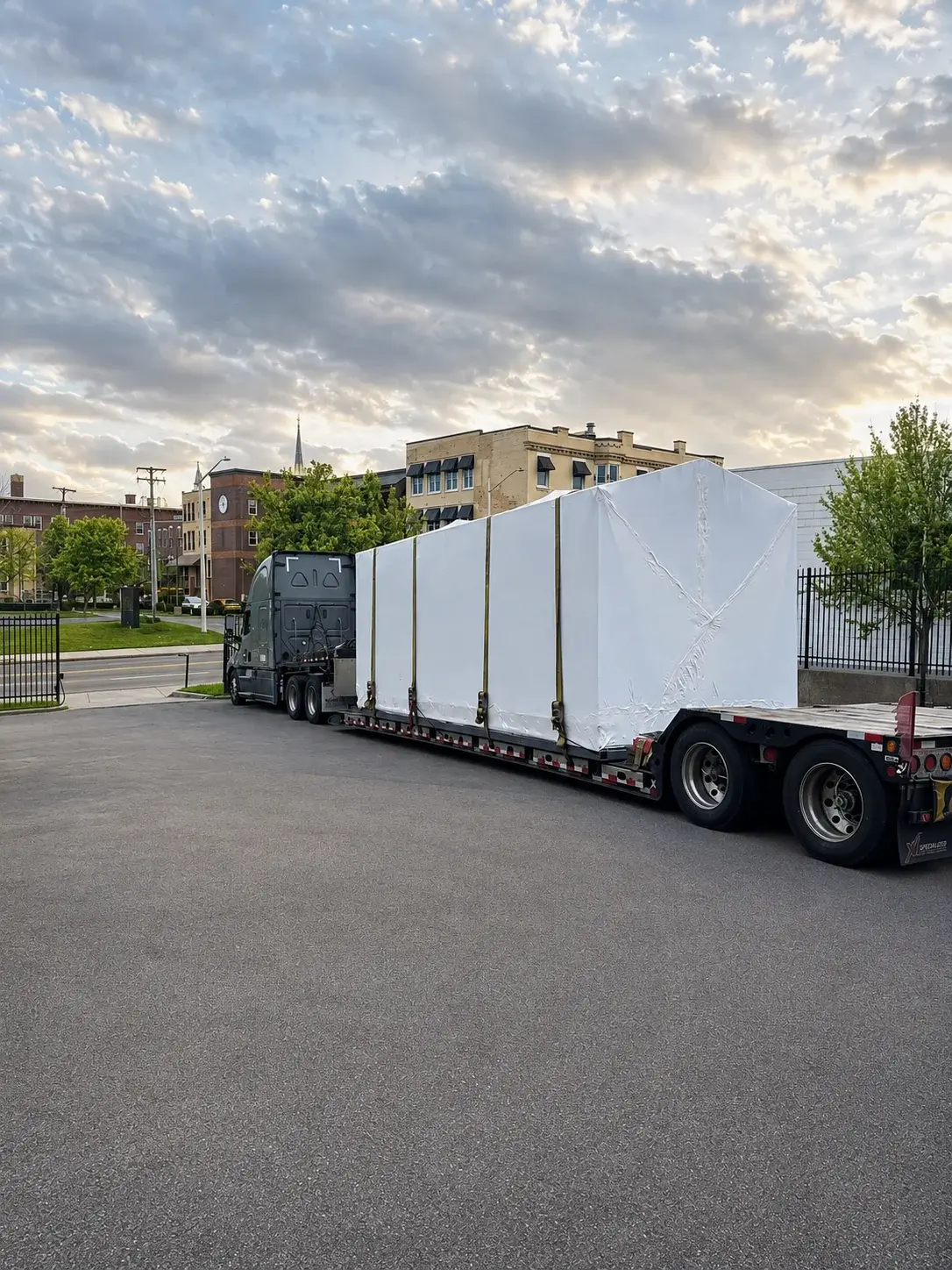
The delivered, titled path is an equipment purchase. A finished cabin is built in a shop, titled as movable equipment on a steel chassis, transported to your property, and connected the way a recreational vehicle connects. The structure cost is set at the factory, and the property-specific spending shrinks to delivery, hookups, and the platform and walkway sections that set and link the cabins. You are not buying a building, you are buying finished capacity and placing it. Our mobile cabin lineup is built entirely for this second path.
The distinction matters because the two structures fail differently under pressure. A construction budget overruns through change orders, weather delays, and a contractor's schedule, and every week of slippage on a seasonal property risks the calendar you were building for. An equipment budget overruns mostly through distance and utility surprises, both of which you can price before you commit. Neither path is free of risk. They just put the risk in very different places.
What you do not spend
The most valuable numbers in a cabin budget are often the ones that are zero. On the delivered path, four substantial categories of site-built spending do not exist, and they are worth naming precisely because they are the categories a per-square-foot comparison quietly ignores.
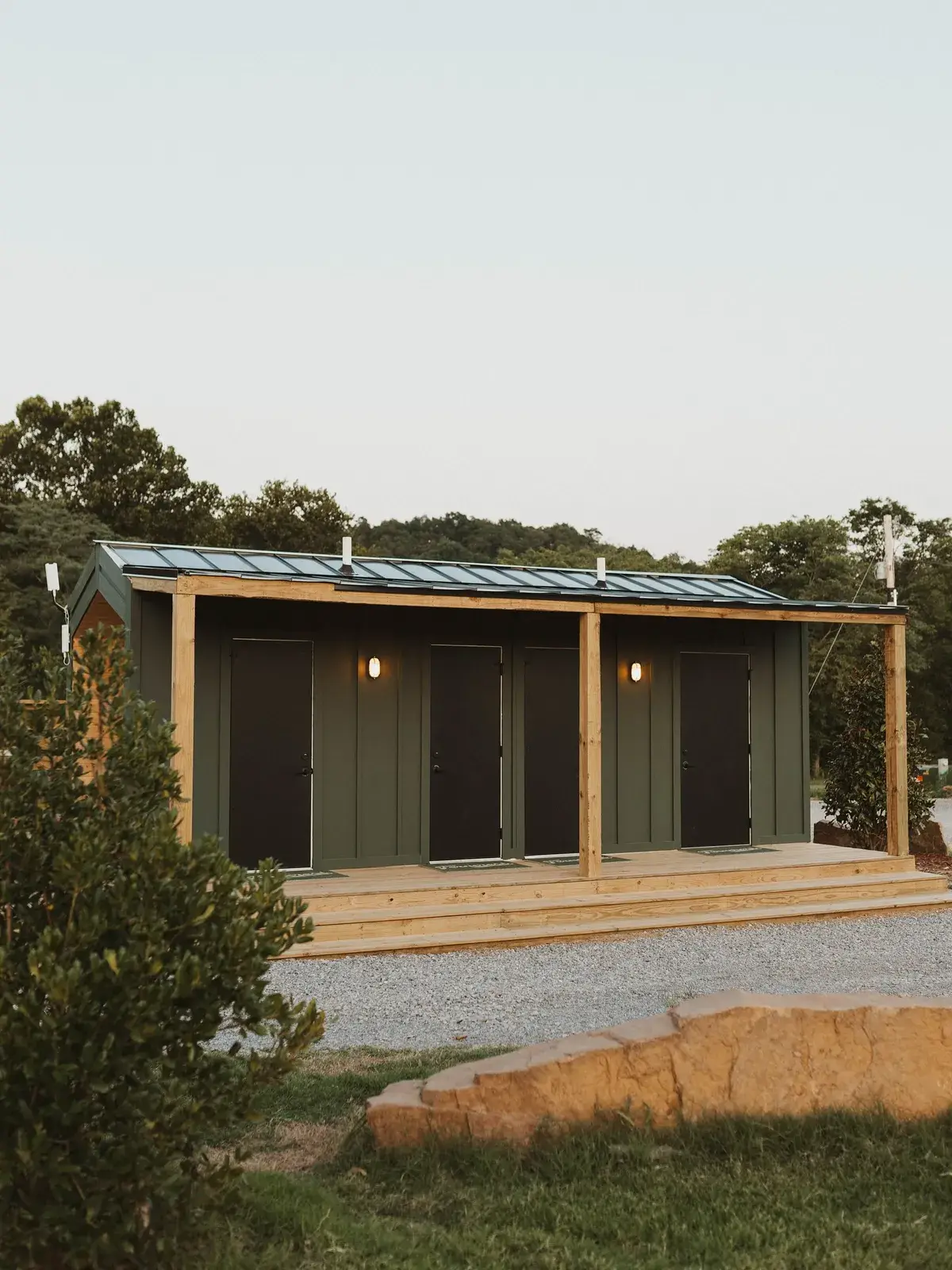
Foundation and site excavation. A permanent cabin needs a footing or slab, which means grading, excavation, concrete, and the labor to place it. A titled cabin sets on a prepared pad or on platform sections and floats on a concealed plinth, with no poured foundation and no excavation crew.
Septic design and installation. This is the line operators underestimate most. A conventional onsite wastewater system is not a fixture, it is an engineered system: a buried, water-tight tank and a drainfield sized to soil that has to be percolation-tested, designed, permitted, and installed before it treats a drop.[2] On rural ground with marginal soils, that engineering and installation is commonly a five-figure line item on its own, and it is a hard gate on when you can open. A self-contained cabin with onboard tanks, or a cabin served by a shared bathhouse or Bath Pod, sidesteps the design-and-permit path for the individual cabin entirely.
The building permit for the structure. A permanent building is permitted as a permanent building, with plan review and inspections on the structure itself. A titled RV asset is not that, so the structure does not carry a building permit. This is not a claim that no local rules apply, they do, and they vary. It is a claim about which specific and expensive approval process the structure avoids. Our guide to the township conversation covers what still does apply and how to confirm it early.
Months of on-site construction. The site-built path buys a construction timeline, and for a seasonal park that timeline is a cost even when the quote does not list it. A build that lands mid-season is a season of the cabin sitting empty while the meter on your capital runs. Our order-to-first-guest timeline walks through where those weeks actually go, and where a season gets lost waiting.
What you do spend
The delivered path is not free of property-specific spending, and it would be dishonest to pretend otherwise. There are four buckets, and all four are smaller and faster than their site-built counterparts, but they are real and you should budget them deliberately.
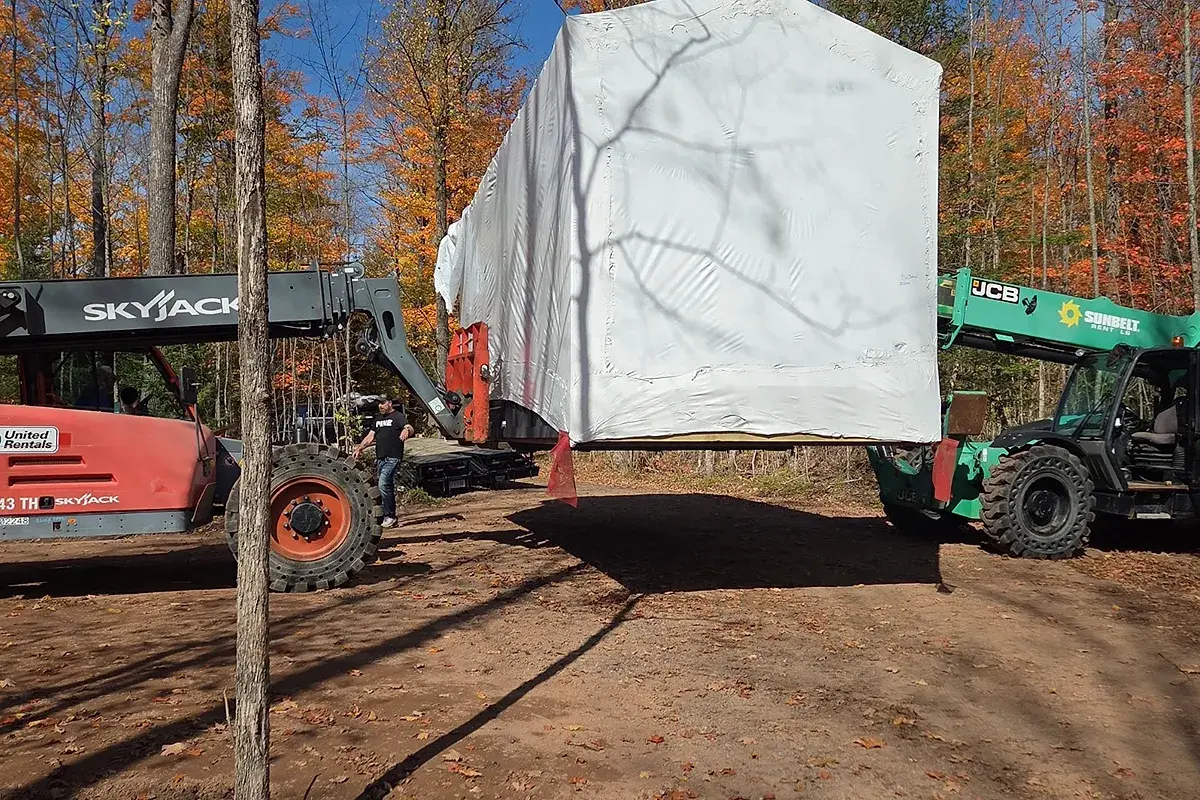
Delivery and setup. A finished cabin has to travel from the shop to your property, and Pine prices that by distance, transparently, so a park two hours from the shop and a park two states away are not charged the same. Setup is the crew and equipment that place and level the cabin. The photo at the top of this page is that moment: a finished space, still wrapped from transport, lifted into position by two telehandlers, no foundation crew in sight.
Utility connections. A cabin connects like an RV, through a standard power pedestal, a water connection, and a sewer connection or a holding-tank service interval. If your property already hosts RVs, much of this already exists. If it does not, this is where a chunk of your property-specific budget lives, and it is worth pricing against your existing infrastructure before you order. Running a property where nothing is stubbed to the lot line is its own subject; we treat it in the off-grid utilities guide.
Platforms and walkways. Cabins rarely stand alone. Platform sections built in our shop form the terrace a cabin sits on, and lit walkway sections connect the cabins with utilities run beneath rather than trenched into the ground. These are priced per section, so the cost tracks how much connective structure your layout actually needs.
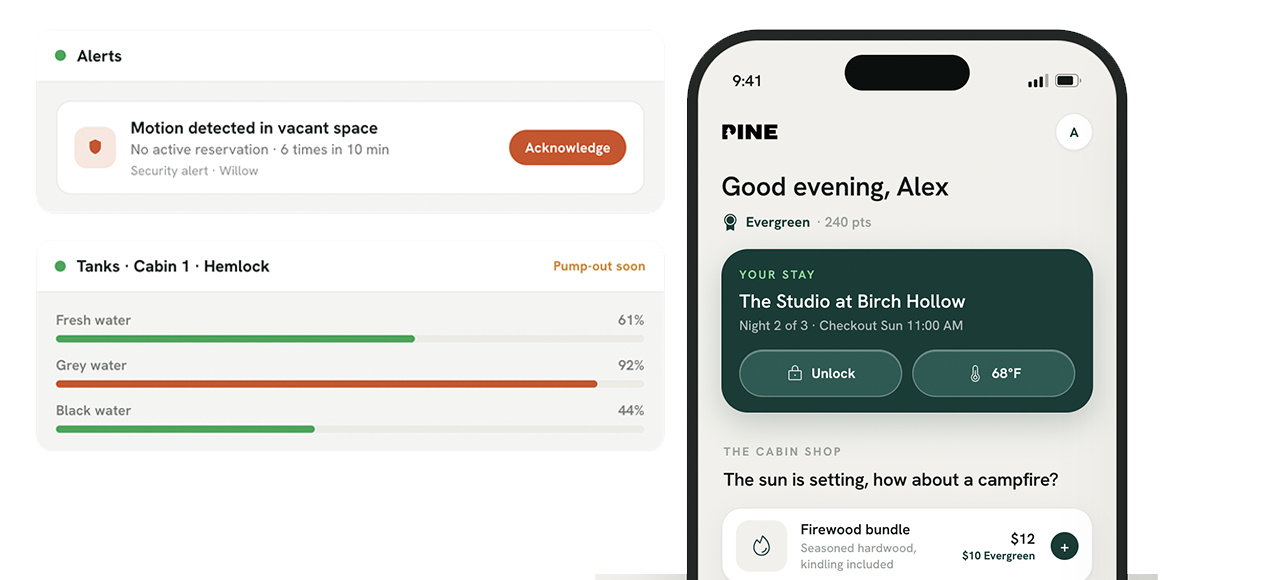
The technology service layer. Every Pine cabin ships with the smart-lock, sensor, and monitoring hardware standard, and the Innkeeper service that runs the physical property from your existing booking calendar is a recurring line at $99 per space per month. It is not a booking system and it does not replace Airbnb, VRBO, Campspot, or your property manager. It reads that calendar and operates the cabin from it. Budget it as an operating cost, the way you budget power or cleaning, not as a one-time capital item.
The all-in picture, category by category
Laid side by side, the two cost structures are easier to compare honestly. The table below is qualitative on purpose: the point is which categories exist on each path, not a fabricated dollar total, because your real numbers depend on your property, your distance, and the cabin you choose.
| Cost category | Site-built cabin | Delivered, titled cabin |
|---|---|---|
| Foundation and excavation | Required, poured on site | None, sets on a pad or platforms |
| Septic design and installation | Engineered, tested, permitted, installed | Onboard tanks or a shared bathhouse |
| Building permit for the structure | Required, with plan review | Not a permitted building (local rules still apply) |
| On-site construction time | Months, often a lost season | Placed and connected in days |
| The structure itself | Priced by contractor, exposed to build inflation | Fixed at the factory |
| Delivery and setup | Materials delivered, built in place | Distance-based transport plus set crew |
| Utility connections | Trenched and hard-plumbed on site | RV-style pedestal, water, and sewer |
| Platforms and walkways | Framed on site if included | Shop-built sections, priced per section |
| Technology service layer | Added separately if at all | Hardware standard, $99 per space per month |
Read the table as a map of where each path puts your money and your time, not as a scoreboard. A large, permanent lodge with unusual architecture may still belong on the left column. Adding rentable cabins to an existing campground on a seasonal calendar almost always belongs on the right, because the delivered path collapses the two most expensive variables, the permitting process and the construction season, into a delivery date.
Which cabin changes the number
Within the delivered path, the single biggest lever on cost is whether the cabin carries its own bathroom, because plumbing and the space it needs are what separate the models. Pine builds three, and the right one for a campground depends on how you are handling baths across the property.
The Pod is the smallest and lowest-cost cabin, with no onboard bath. It is designed to pair with a shared bathhouse, which keeps each Pod inexpensive and pushes the bath investment into one shared building that serves several cabins. The Camp is larger and adds a kitchenette while still sharing a bathhouse, so it reads as a real cabin without carrying private plumbing. The Plus is the largest and the most expensive of the three, and it includes a private bath and a kitchenette. That private bath is not a luxury line, it is a revenue lever: a private bathroom is much of what lets a cabin command a lodging rate instead of a camping rate.
So the cost-effective model is not simply the cheapest one. A field of Pods sharing a well-planned bathhouse can pencil beautifully for a park that already draws campers, while a handful of Plus cabins can justify their higher all-in number by earning a materially higher nightly rate. The decision belongs in a layout conversation, which for an existing park starts on the campgrounds and resorts page, and for a new property built from scratch starts on the landowners and new operators page. Sizing the shared baths that Pods and Camps depend on is its own discipline, worked through in our campground bathhouse sizing guide.
How each path gets financed
The two cost structures also tend to be financed differently, and that difference is worth understanding before you assume the site-built path is the more bankable one. Broadly, a permanent building is financed as real property, while a cabin titled as movable equipment can fit equipment-style financing. Both routes are open to outdoor-hospitality businesses, and the federal programs most operators encounter are the same ones a lender will raise.
The U.S. Small Business Administration's 504 program provides long-term, fixed-rate financing for major fixed assets, which covers both real estate and long-life equipment, at repayment terms up to 25 years.[3] Its 7(a) program is more flexible and explicitly covers purchasing and installing machinery and equipment alongside real estate and working capital, which is the bucket a titled cabin can fall into.[4] For rural properties, the U.S. Department of Agriculture's Business and Industry Guaranteed Loan Program guarantees a portion of lender financing for eligible rural businesses, and its eligible uses include the purchase of equipment as well as the development of land and facilities, which makes it a common fit for rural campgrounds and outdoor resorts.[5]
The practical takeaway is not a recommendation of any one program. It is that titling cabins as equipment can widen your financing options rather than narrow them, and that the terms, rates, down payment, and eligibility are set by your lender and your circumstances, not by us. Structural facts like these belong in a conversation with your lender and your accountant. Pine does not provide tax, legal, or investment advice, and anything about depreciation, tax treatment, or returns should be confirmed with your own advisors against your own books.
Getting your actual number
Because the two variables that move a cabin budget the most, delivery distance and utility work, are specific to your property, there is no honest single figure to print here, and we would rather give you a way to produce a real one than a brochure number that will not match your invoice. Configure the cabins, platforms, and walkways your layout needs in Build & Price, and the tool returns an itemized estimate with transparent, distance-based delivery for your location. Every estimate there is subject to confirmation by Pine, so treat it as a well-grounded planning number, then let a specific conversation about your property tighten it.
The frame worth keeping, whichever path you choose, is the one a lender will apply anyway: a cabin is not an expense to minimize, it is capacity that earns. The cheapest structure that opens a season late, or the permanent build that ties up capital for months before its first booking, can easily cost more than a delivered cabin that starts taking guests within days of arriving. Price the whole property and the whole timeline, not just the sticker, and the total cost of ownership usually points to the path that also gets you earning fastest.
Frequently asked questions
- How much does it cost to add a cabin to a campground?
- The cabin purchase price is only one line. Plan the total against four buckets: the cabin itself, transport and setup, utility connections and any platforms or walkways, and the ongoing technology service layer. The offsetting story is what leaves the budget entirely, since a delivered, titled cabin needs no foundation, no septic system, no building permit for the structure, and no months of on-site construction. There is no single national number because delivery is distance-based and utility work depends on your property, which is why Pine configures the total in Build & Price rather than quoting a fixed figure.
- Is a delivered cabin cheaper than building one on site?
- Not always cheaper on the structure alone, but usually cheaper all-in and almost always faster to revenue. A site-built cabin adds foundation work, septic design and installation, permitting, a general contractor, and a construction timeline measured in months, and for a seasonal business those months are a lost season that never appears on the quote. When operators compare the fully loaded cost and the time to first booking, the delivered path tends to win for adding capacity to an existing park.
- What costs do you avoid with a titled, delivered cabin?
- Four big ones. No foundation and site excavation, no septic system to soil-test, design, permit, and install, no building permit for the structure itself, and no months of on-site labor. A self-contained cabin arrives finished and connects the way a recreational vehicle does, so those line items simply are not in the budget. Local approvals still apply and vary by jurisdiction, so confirm what your township and county require before you order.
- What extra costs come with a delivered cabin?
- Delivery is priced by distance, so it scales with how far the cabin travels to your property. Beyond that, budget for utility connections (an RV-style power pedestal, water, and sewer or holding-tank service), any platform and walkway sections that set and connect the cabins, and the Innkeeper service layer, which runs $99 per space per month with the hardware standard in every Pine space. These are real costs, but they are smaller and faster than pouring a foundation and trenching a septic field.
- Can I finance cabins for a campground, and how is that different from financing a building?
- Yes, and the structure of the financing often differs from real-property construction. A cabin titled as movable equipment can fit equipment-style financing, while a permanent building is typically financed as real estate. SBA 7(a) and 504 loans and the USDA Business and Industry Guaranteed Loan Program are commonly used by rural outdoor-hospitality businesses for both equipment and property. Terms, rates, and eligibility are set by your lender and your situation. Pine does not provide tax, legal, or investment advice, so confirm the details with your lender and advisors.
- Which Pine cabin is the most cost-effective for a campground?
- It depends on whether the cabin carries its own bathroom. The Pod is the smallest and lowest-cost, with no onboard bath, so it pairs with a shared bathhouse. The Camp adds a kitchenette and also shares a bathhouse. The Plus is the largest and costs the most, but it includes a private bath and kitchenette, which is much of what separates a camping rate from a lodging rate. The cost-effective choice is the one whose nightly rate and occupancy justify its all-in number for your park.
- How is a titled cabin treated differently from a permanent building?
- A Pine cabin is titled as movable equipment on a steel chassis rather than built as real property on a foundation. That structural distinction is what changes how it is permitted, financed, and, potentially, taxed and depreciated. The specific outcomes depend on your jurisdiction and your books, so treat this as a structural fact to raise with your own accountant and attorney, not as a promised result. Pine does not provide tax, legal, or investment advice.
Sources
- Producer Price Index for nonresidential building construction. U.S. Bureau of Labor Statistics.
- How your septic system works. U.S. Environmental Protection Agency.
- 504 loans: long-term, fixed-rate financing for major fixed assets. U.S. Small Business Administration.
- 7(a) loans: financing for equipment, real estate, and working capital. U.S. Small Business Administration.
- Business and Industry Guaranteed Loan Program. U.S. Department of Agriculture, Rural Development.
This paper draws on Pine’s experience manufacturing, delivering, and setting mobile spaces for campgrounds and new properties, alongside cited federal sources on construction cost trends, onsite wastewater systems, and small-business financing. Dollar figures here are either cited program facts or explicitly labelled as illustrative; configured pricing lives in Build & Price, and every estimate there is subject to confirmation by Pine. Permitting, tax, depreciation, and financing outcomes are specific to your jurisdiction and your books. Confirm them with your township, your lender, and your own tax and legal advisors. Pine does not provide tax, legal, or investment advice.
Working through this for a specific property?
Build & Price