Pine whitepaper
How long does it take to go from order to first guest?
A Pine whitepaper on the real order-to-first-guest timeline, stage by stage: why the install measures in a day, while the honest clock is set by the build queue, not the shovel.
The short answer, then the real one
From order to first guest, most Pine properties come together in a matter of weeks to a few months, and the honest driver of that number is the build queue, not the install. Configuration and ordering take a day to about two weeks. The spaces are then built and finished to order, which is the longest single stage. Transport runs a few days to roughly two weeks depending on distance. Placement and utility hookups on a prepared lot typically take about one day. You can be taking bookings before the truck arrives.
The one-day figure is about install, meaning placement, leveling, and hookups on a lot that is ready. It is not the lead time. A finished cabin is manufactured to order, so the build queue, not the shovel, sets how soon you can host. Anyone quoting you a same-week cabin is quoting install and hiding the queue.
That distinction is the whole subject of this paper. Below we break the timeline into the five stages an order actually passes through, put a realistic range on each, say plainly which one you wait on, and then contrast the whole path with the site-built alternative, where a foundation, a permit, and a construction season can quietly cost you an entire booking year.
Lead time is not install time
The most common confusion we untangle for a first-time buyer is between two clocks that have nothing to do with each other. Install time is how long it takes to place a finished space on your property and connect it. Lead time is how long it takes to build that space and get it to you. They are unrelated, and conflating them is how people end up disappointed by a fast product.
A Pine space is built complete in the shop and delivered finished on a trailer, titled as a movable asset on a steel chassis. Because it arrives done, the on-property work is short: set it, level it, connect RV-style power, water, and sewer, and it is ready. That is the part that happens in about a day. None of it shortens the weeks the cabin spent being built, or the days it spent in transit. When we say a Pine property installs in a day, we mean exactly the install, and we are careful to say so, because the reverse claim, that a whole cabin appears in a day, is not true of us or of anyone.
The reason this matters for planning is that the two clocks are managed in completely different ways. You compress install time with lot prep, which is in your control. You manage lead time by ordering earlier, because the build queue is not something a rush can fully collapse. Plan around the right clock and the timeline stops surprising you.
The five stages, and realistic ranges
Here is the whole path, start to finish, with the range we see in the field on each stage. Treat the ranges as typical planning guidance rather than a promise: your configuration, your place in the queue, the distance to your property, and your local rules all move them.
| Stage | What happens | Typical range | What moves it |
|---|---|---|---|
| 1. Configuration and order | Choose your spaces and options, confirm the lot, place the order | A day to about 2 weeks | How settled your decisions and lot are |
| 2. Build queue | Your spaces are built and finished to order in the shop | The longest stage: weeks to a few months | Queue position and season |
| 3. Transport | The finished space is wrapped and hauled to your property | A few days to about 2 weeks in transit | Distance, and permits for over-legal widths |
| 4. Siting and hookups | Placement, leveling, and RV-style power, water, and sewer connections | Typically about 1 day on a prepared lot | Lot access and prep, off-grid vs connected |
| 5. Listing and go-live | The listing is open and the first guest checks in | As little as a few days, and you can list before it lands | Your booking channel and photos |
Add those up and the pattern is clear. Four of the five stages are short or in your control. One, the build queue, is the real wait, and it is the one worth starting early. Everything from choosing your cabins to placing the order can be done in an afternoon once your lot is settled, which means the fastest thing you can do for your timeline is order sooner rather than perfect the spec.
The honest part: the build queue
We will be candid about the stage most brochures gloss over. A Pine cabin is not pulled from a shelf. It is built and finished to your order in our own shop, and that takes real time, on the order of weeks to a few months depending on where your order lands in the queue and what time of year you place it. Spring, when everyone in outdoor hospitality wants inventory before the season, is the busiest window and the longest wait. We would rather tell you that up front than surprise you with it.
There is an upside, though. Because manufacturing happens in a controlled shop rather than on your property, the queue is the only long wait, and it runs in parallel with everything you need to do anyway. While your cabin is being built, you prepare the lot, arrange utilities, and build your listing. None of that competes with a crew standing in your yard through a construction season. Compare that to the site-built path, where the equivalent weeks are spent with your property torn up, weather-exposed, and unbookable.
Our practical advice is simple: get in the queue as early as you can commit, and confirm current lead time when you order rather than planning against a number you read once. Lead time is the one stage we will not pretend is instant, and it is precisely why ordering in winter for a spring open beats ordering in spring for a spring open.
Transport, then siting in a day
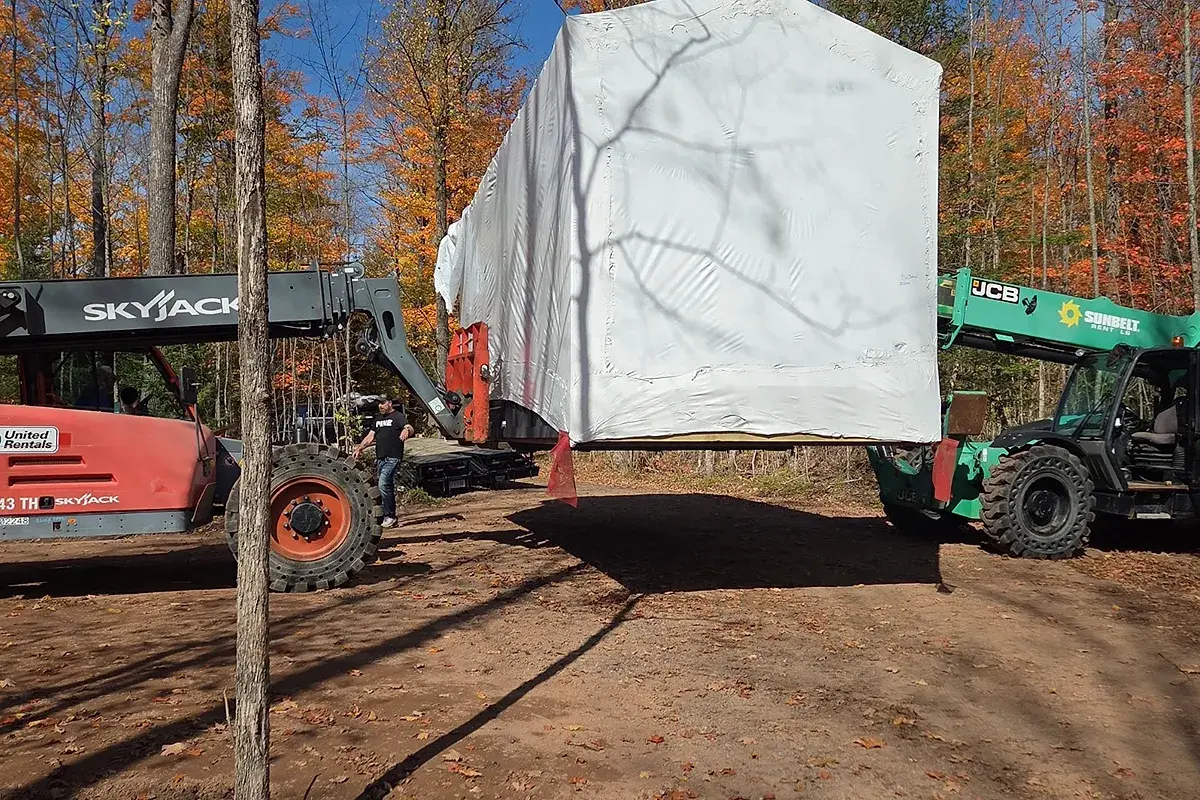
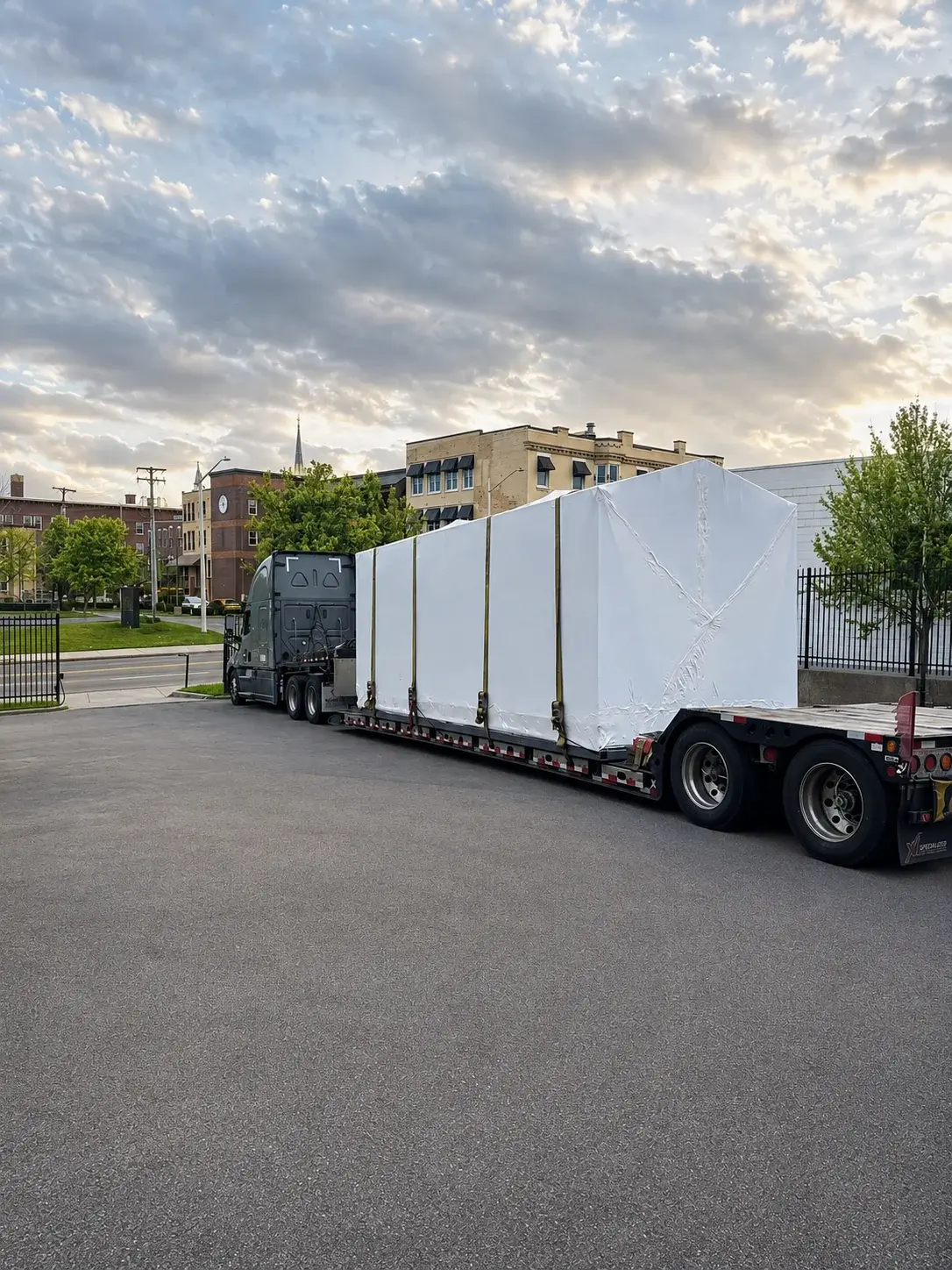
Once your space is finished, it is wrapped, loaded on a trailer, and hauled to your property. Transit is mostly a function of distance, usually a few days to about two weeks. The one variable worth understanding is width. Federal rules set the standard legal transport width at 8 feet 6 inches, and a load beyond that generally needs a state oversize permit to travel public highways.[1] A narrower cabin moves as an ordinary legal load. A wider space, like our larger models, can require that permit, which states issue on a single-trip or annual basis and which is routine for haulers who move manufactured buildings.[2] The permit adds a little lead time to arrange, not a large amount of travel time, and it is the hauler's job, not yours.
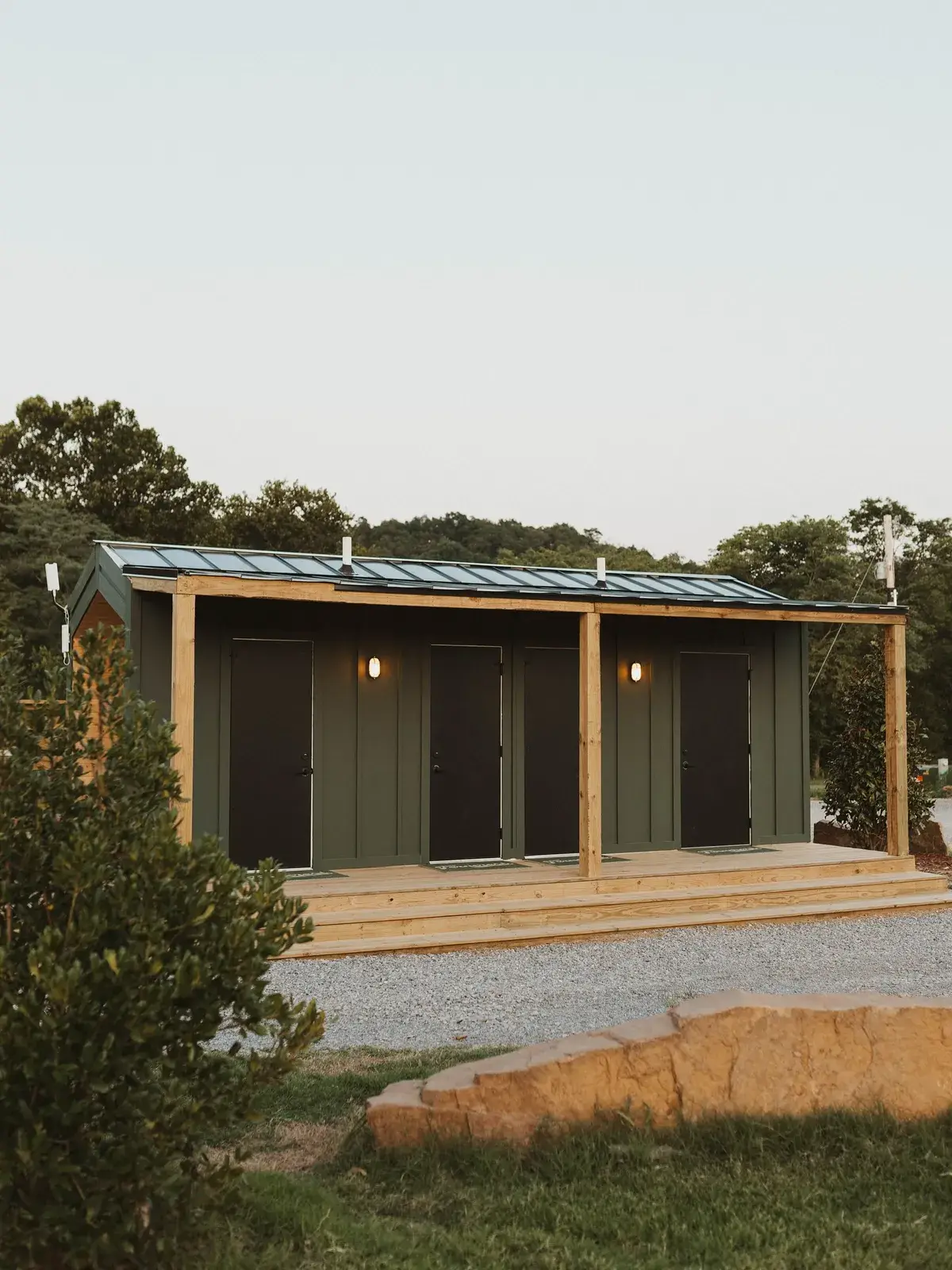
Then comes the stage that gives the mobile approach its reputation. On a lot that is cleared, level, and truck-accessible, we place the space, level it, and connect it the way you connect a recreational vehicle: a power pedestal, a water connection, and a sewer connection. That work is typically a single day. If your property already hosts RVs, you already have what a space needs. If utilities do not reach the lot line at all, that is a solvable problem with its own planning, which we cover in running a property with no utilities at the lot line, and the onboard tanks plus Pine's hardware and network are designed for exactly that local-first case.
Across our deliveries, the single most common cause of a slow siting day is not the cabin, it is the lot: not level, not cleared, or not reachable by the delivery truck. Prep the lot and confirm access before transport is scheduled, and the one-day install holds.
From on the lot to first booking
The last stage is the one most operators overbudget for, because they assume it starts when the cabin lands. It does not have to. Since your space is finished before it ships, you can create the listing, shoot or stage photos, and open your calendar while the unit is still in transit, so the first reservation can fall on the first available night. The go-live stage becomes a few days of listing work rather than a fresh project.
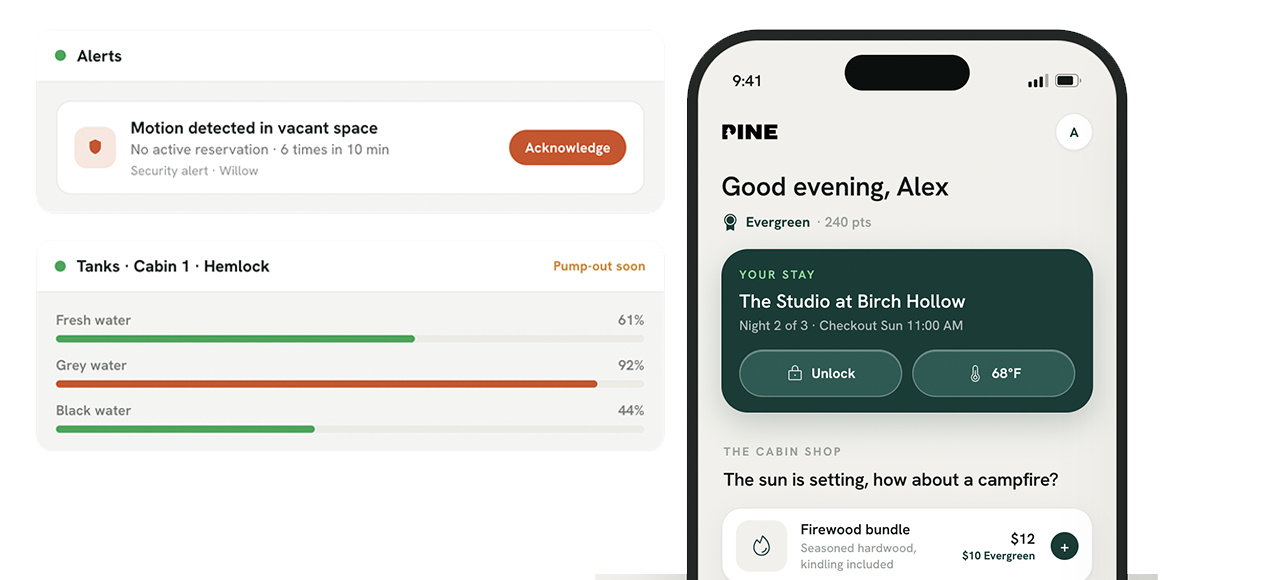
This is also where the fear of changing systems tends to surface, and it is unfounded. You keep the booking tools you already use. Airbnb, VRBO, Campspot, or any calendar you run today stays exactly as it is, and Innkeeper reads that calendar to run the physical space, locks, climate, and monitoring, from the bookings you already take. Going live does not mean replatforming. It means pointing your existing channel at one more listing.
The site-built path, and the season it can cost
The contrast that makes all of this worth measuring is the traditional path: a permanent, site-built cabin or a park model set on a foundation. That path front-loads exactly the delays the mobile approach removes. Before a single wall goes up, a permanent structure needs a foundation, on- property plumbing and electrical, and a building permit, and permit review is not a formality. Even where a state puts a statutory clock on local review, that clock can be long: Washington, for one, gives local governments up to 120 days to decide a project permit, and a review that requires public notice or hearings tends to use most of it.[3] That is before construction, weather, and inspections. The questions worth asking your local authority before you commit to that path are laid out in what to ask your township before you build.
In a seasonal business, that timeline is not a scheduling detail, it is a revenue event. Outdoor recreation demand is heavily concentrated in the warm months: federal recreation-visitation data, reported monthly, shows the sharp summer peak that every campground owner already feels on a Saturday in July.[4] A build that slips past spring does not just open late, it opens after the demand it was meant to capture has already passed, and a construction season lost is a booking season lost. That is the number the per-square-foot quote never shows, and it is the one an operator planning a campground or resort expansion should weigh first.
None of this makes site-built wrong for every case. A very large or highly custom structure may still belong on a foundation. But when the goal is rentable capacity in service for the coming season, the mobile path wins on the only clock that pays you back, which is time to first guest.
How to take weeks out of your timeline
Because the stages are separable, the timeline responds to a few specific moves, and most of them cost nothing but foresight. In order of impact:
- Order early, before you have perfected the spec. The build queue is the long pole, so a week saved at the front of it is worth more than any decision you agonize over later. Configuration is quick; get in line.
- Prep the lot in parallel. While your space is being built, clear and level the lot and confirm truck access. This is the difference between a one-day install and a rescheduled delivery.
- Sort utilities during the build, not after. Whether you are connecting RV-style or setting up off-grid, solve it while the cabin is in the queue so hookup day is genuinely a day.
- Build the listing before it lands. Open the calendar and load photos while the unit is in transit, so bookings start on night one instead of a week later.
- Confirm live lead time when you order. Seasonality moves the queue, so plan against the current number, not a remembered one. Ordering in the off-season for a spring open is the cleanest way to beat the rush.
Do those five things and the order-to-first-guest timeline collapses to about one thing you wait on, the build, with everything else already handled by the time the truck arrives. If you are starting from raw land rather than an existing park, the landowners and new operators page frames the rest of the project. When you are ready to put real dates on it, Build & Price is where you configure your property and see current delivery for your location.
Frequently asked questions
- How long does it take to go from order to first guest with Pine?
- For most orders, plan on a matter of weeks to a few months, and the build queue is what dominates that number, not the install. Configuration and ordering can be a day to about two weeks, finished manufacturing is the longest single stage, transport runs a few days to roughly two weeks depending on distance, and placement with utility hookups is typically about one day on a prepared lot. Ranges are typical and depend on your configuration, distance, and current queue, so confirm live timing when you order.
- Does Pine really install a cabin in a day?
- Yes. On a prepared, accessible lot, placement, leveling, and RV-style power, water, and sewer hookups typically take about a day. That one-day figure is about install, not lead time. The build queue and transport happen before the space ever reaches your property, so a same-day install does not mean a same-week delivery.
- What is the longest part of the timeline?
- The build queue, meaning the time it takes to actually build and finish your spaces in the shop. A finished, titled cabin is manufactured to order, so this stage is measured in weeks to a few months depending on where you land in the queue and the season. It is the honest constraint on how fast you can host, which is why we quote current lead time at the point of order rather than promising a fixed number.
- How long does delivery and transport take?
- Transit itself is usually a few days to about two weeks, driven mostly by distance from the shop to your property. A cabin at legal transport width moves as a standard load, while a wider space can require a state oversize permit, which adds lead time to arrange but not a large amount of travel time. Permitting requirements are set by each state, so the exact wait varies by route.
- Can a site-built cabin be ready faster?
- Rarely. A permanent, site-built cabin adds a foundation, on-site utility work, and a building permit before construction even starts, and plan review alone can run from weeks to several months where public notice or hearings apply. In a seasonal outdoor-hospitality business, a construction timeline that slips past spring can cost you the summer, which is when most of the year's demand actually arrives.
- Can I list the cabin before it arrives?
- Yes, and you should. Because a Pine space is finished before it ships, you can create the listing, load photos, and open your booking calendar while the unit is still in transit, so reservations start the day it lands. Your existing calendar keeps working exactly as it does now, since Innkeeper reads it rather than replacing it.
- What do I need ready on the lot before the cabin arrives?
- A cleared, level, truck-accessible lot and a plan for power, water, and waste, either RV-style connections or an off-grid setup. If your property already hosts RVs, you likely have what a space needs. The single most common cause of a slow install is a lot that is not ready or not reachable by the delivery truck, so confirm access and prep before the transport is scheduled.
Sources
- Truck size and weight regulations and permitting. Federal Highway Administration, U.S. Department of Transportation.
- Oversize and overweight permit types, including manufactured buildings. Minnesota Department of Transportation.
- Local project permit review and statutory review timelines. Municipal Research and Services Center (MRSC).
- Visitor use statistics dashboard (monthly recreation visitation). U.S. National Park Service.
This paper draws on Pine's experience configuring, manufacturing, delivering, and siting spaces across varied distances and seasons. Every stage range is offered as typical planning guidance, not a guaranteed schedule: your actual timeline depends on your configuration, your position in the build queue, distance to your property, and local permitting and utility rules. Confirm current lead time and delivery when you order, and confirm any permitting question with your own local authority. Pine does not provide legal advice.
Working through this for a specific property?
Build & Price