
Pine whitepaper
How is a titled asset treated differently from real property?
A structural look at what changes when an asset is titled as movable equipment instead of deeded as real property, and why the specifics belong with your own attorney and accountant.

The short answer, then the real one
A titled movable asset and a piece of real property are two different legal objects, and almost every practical difference a portfolio owner cares about flows from that one distinction. Real property is land and the improvements permanently attached to it, conveyed by a deed recorded against the parcel.[1] A Pine space is built and titled as movable equipment on a steel chassis, closer in legal category to a titled recreational vehicle than to a building. It is owned through a certificate of title, not a deed, and it is not part of the ground it sits on.
That is the fact we can state plainly. What we will not do, anywhere on this page, is tell you how that classification lands on your tax return, your assessment, or your books. Those outcomes depend on your jurisdiction, your entity, and how the asset is used, and getting them right is the work of your own attorney and accountant. Below we lay out the structural differences that are true in general, and we mark clearly every point where the specifics leave our lane and enter theirs.
Pine does not provide tax, legal, or investment advice; consult your own advisors. Everything here describes general structural distinctions, not conclusions about your situation. Tax, depreciation, assessment, and accounting treatment vary by jurisdiction and by use, and only your own accountant and attorney can apply them to you.
A title and a deed are two different objects
The cleanest way to hold the distinction is to look at what you actually own and how you prove it. With real property, you own a parcel of land plus whatever is permanently affixed to it, and your ownership is a deed recorded in the county land records that runs with that ground.[1] A building sitting on a foundation is, in the usual case, part of the real property: it is an improvement, and it conveys with the land because it has become legally inseparable from it.
A titled movable asset is the opposite kind of thing. It is a chattel, an item of personal property that keeps its own identity no matter whose ground it happens to rest on. You prove ownership with a certificate of title tied to a vehicle identification number, the same instrument that documents ownership of a trailer or a recreational vehicle. It is not welded to a place. This is why the portfolio buyers we work with, and the funds and hospitality groups we build for at funds and hospitality groups, tend to think about a fleet of titled assets differently from a set of deeded buildings: the asset and the land underneath it are two separable things, and each can be owned, moved, financed, and sold on its own terms.
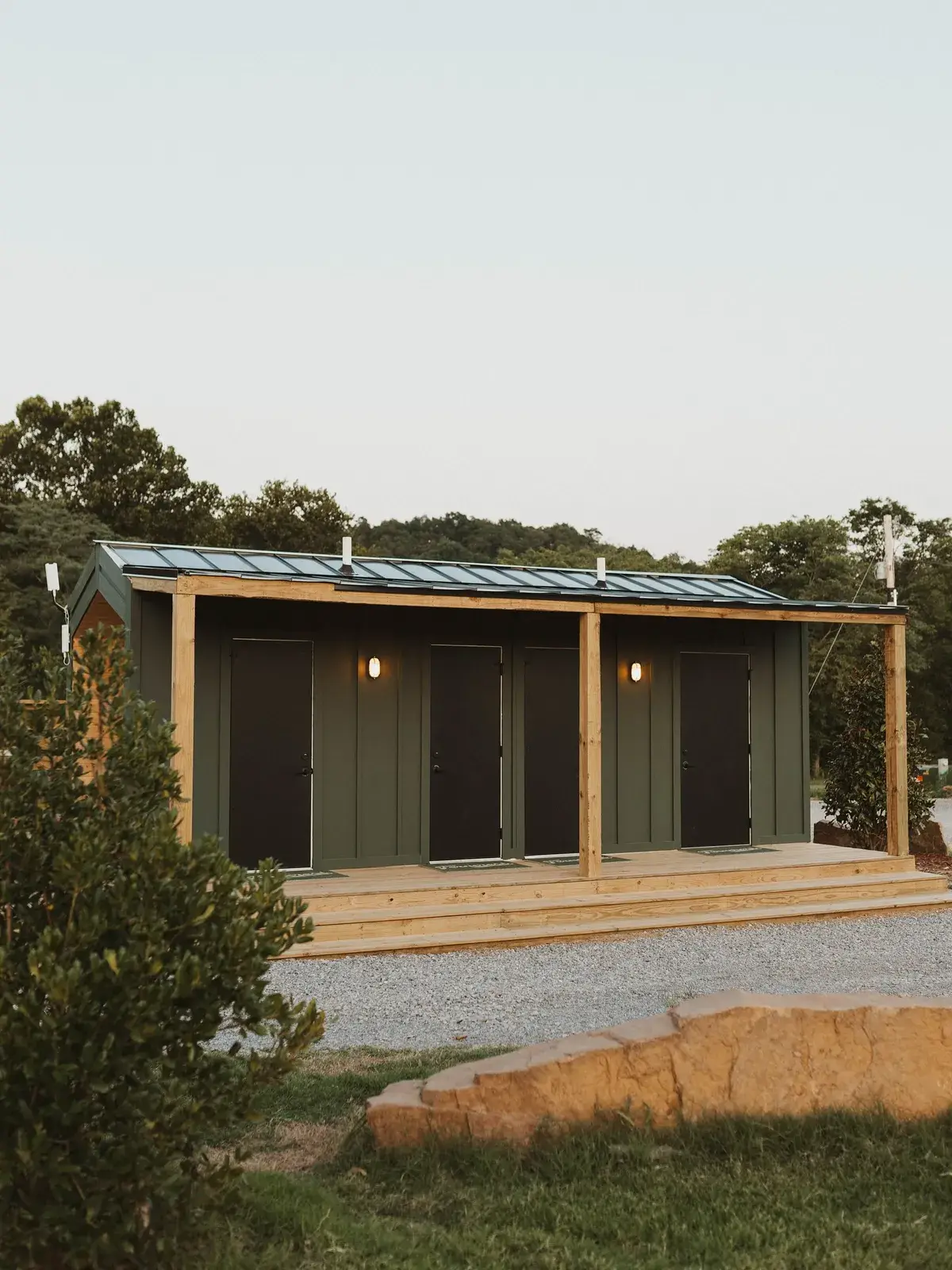
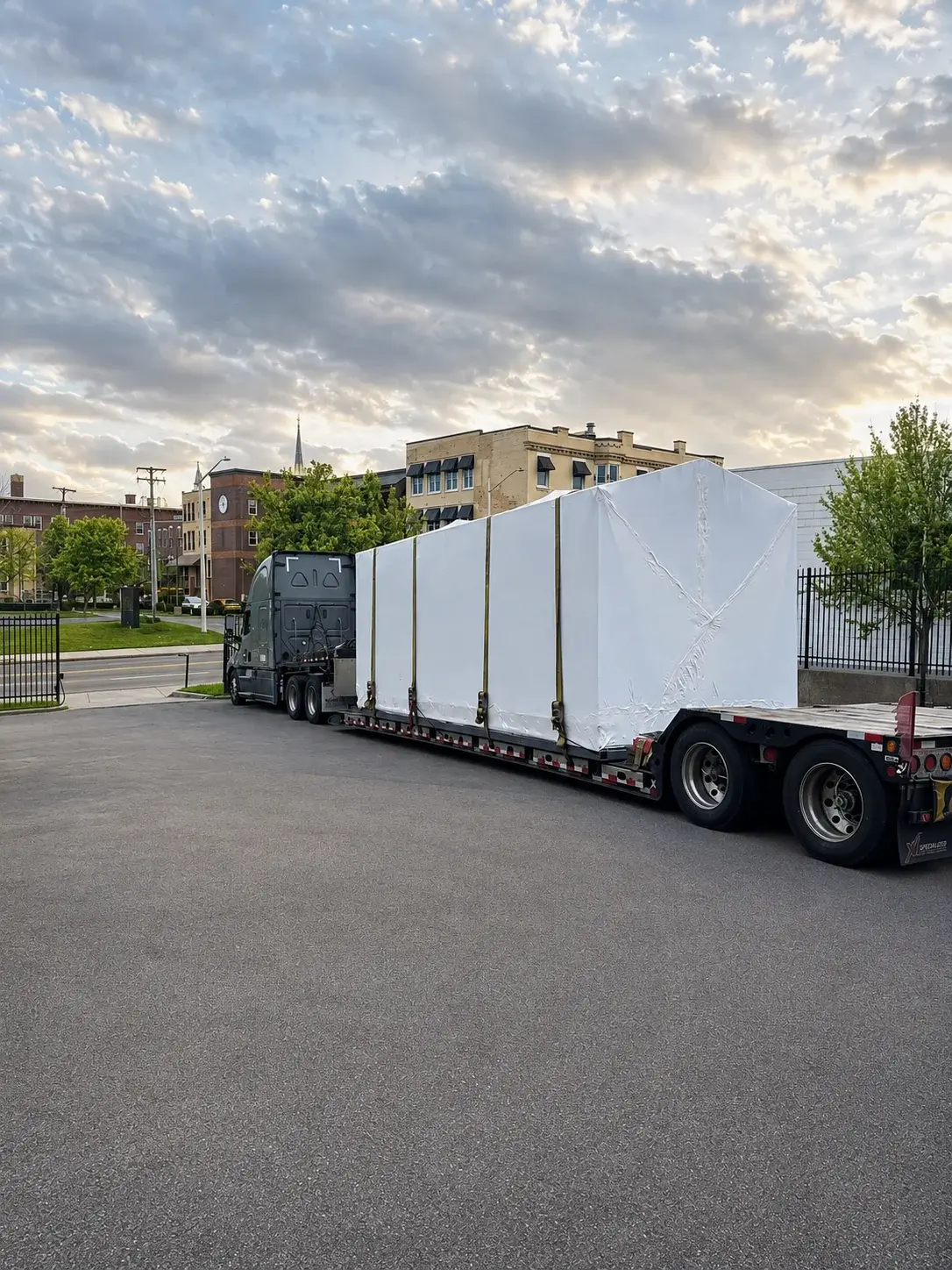
Pine builds to that reality on purpose. Our mobile cabins, bath pods, and mobile bathhouses are finished structures delivered on a steel chassis and titled as movable equipment, with standard recreational-vehicle-style power, water, and waste connections rather than foundations and buried utility runs. The finish is permanent-feeling; the legal category is not. That gap between how a space feels and how it is titled is the whole subject of this page.
How the asset comes into being
Real property and a titled asset are even created through different offices. Real property changes hands at the county recorder: a deed is drafted, signed, and recorded, and the chain of title lives in the land records. A titled movable asset comes into being at the motor vehicle agency, which issues a certificate of title against the space's identification number. States title park model recreational vehicles through their motor vehicle agencies; Utah, for example, requires newer park models to be titled and lets owners of older ones request a title.[2] The exact forms and thresholds are set state by state, so treat your own state agency as the authority.
There is a second classification worth understanding, because portfolio buyers ask about it constantly: the line between a recreational vehicle and a manufactured home. Federal housing law runs a construction and safety standard, the HUD Code, that governs manufactured homes built to be permanent dwellings on a permanent chassis.[3] Recreational vehicles sit outside that program, in a separate category, because they are built as movable, temporary-use equipment rather than as permanent housing. We are careful about how we describe Pine's own position here: a Pine space is built and titled as movable equipment on a steel chassis. We do not claim any particular certification, and where you can place and operate a space is a local land-use question your jurisdiction decides, separate from how the asset is titled. For a fuller treatment of how Pine sits next to the park model category, see Pine versus park models and the companion guide on park model or stick-built economics.
Permitting and siting: equipment placed, not an improvement built
The permitting story follows straight from the category. Building an improvement on real property generally means a building permit, a foundation, inspections tied to the structure, and a construction schedule measured in months. That work is what converts materials into an improvement that becomes part of the real estate. It is also, for a seasonal hospitality operator, where a year can quietly disappear.
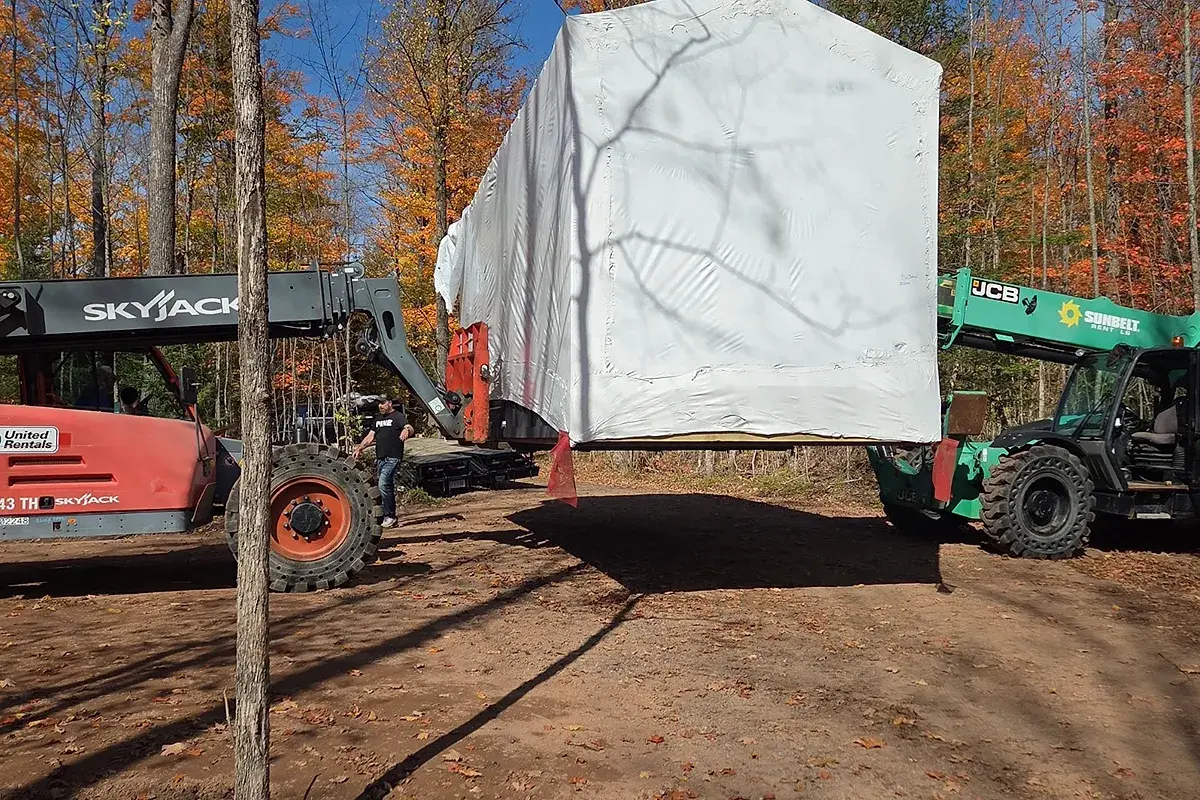
Placing a titled movable asset is a different act. The structure already exists and is already titled when it arrives; siting it is closer to parking and connecting equipment than to erecting a building. Local land-use rules still apply, and they are the part that varies most, so this is one more place we point you at your own authority rather than promise an outcome. What we can say structurally is that the asset does not need to become a permanent improvement to the land in order to be used, and in most cases keeping it as titled, movable equipment is exactly the point. Placement and operating permission are decided by your jurisdiction, which has the final say.
Permanently affixing a movable asset to the ground, a poured foundation, hard-wired electrical, hard-plumbed water and sewer, can cause a local authority to reclassify it from movable equipment into an improvement to real property. That reclassification can reopen the exact permitting and assessment questions the movable approach was chosen to avoid. Standard, reversible connections keep the asset in its titled category. The specific triggers are set locally, so confirm them with your own attorney and authority.
Financing and insurance: movable collateral, not real estate
Lenders and insurers underwrite the two categories through different doors, and this is worth knowing before you assume a real estate process applies. Real property is financed with a mortgage secured by a lien recorded against the land, underwritten on the parcel and its improvements, and insured as real estate. A titled movable asset is not real estate collateral. It is typically financed and insured as titled personal property or equipment, with the security interest tied to the title rather than recorded against a parcel.
We are deliberately not telling you which structure is cheaper, which lender will say yes, or how an asset will be valued, because those answers depend on the lender, the program, and your entity, and they change. What matters structurally is that a fleet of titled assets and a portfolio of deeded real estate present differently to a capital provider: one is movable collateral tied to titles, the other is real property tied to land. Bring both your lender and your own advisors the actual structural facts, that the asset is titled as movable equipment on a steel chassis, and let them run it. If you are weighing how Pine could sit inside a broader ownership or partnership structure, the conversation starts at invest and partner.
Taxes and assessment: where our knowledge stops and your advisors begin
This is the section most readers came for, and it is the one where we are most disciplined, because it is where a manufacturer has the least business making claims. We will give you the general shape of the landscape and the government references that define it, and then we will hand you to your own accountant, deliberately and by name.
In general terms, the federal depreciation system assigns different recovery periods to tangible personal property than to real property. Residential rental buildings, for instance, recover over 27.5 years, and land itself is not depreciable at all, while many categories of tangible personal property carry materially shorter recovery periods.[4][5] Separately, local assessors frequently treat movable personal property differently from real estate on the assessment roll. Those are real, documented structural differences between the two categories.
What we will not do is tell you that a Pine space will be depreciated over any particular period, assessed in any particular way, or produce any particular tax result. Whether a given asset is tangible personal property in your hands, over what period it recovers, how your county assesses it, and how any of it interacts with your entity and your use, are situation-specific determinations that only your accountant and your local assessor can make. Two buyers in the same business can reach different treatments because their jurisdictions and structures differ. Take the structural facts from this page to your own advisors; do not take a tax position from a builder's website.
The structural fact to hand them: a Pine space is built and titled as movable equipment on a steel chassis, not deeded as real property. The questions to hand them: how that asset is classified for depreciation, how your locality assesses it, and how it interacts with your entity and use. Pine does not provide tax, legal, or investment advice; consult your own advisors.
Mobility and disposal: sell the asset, or sell the ground
The categories part ways again at the end of the asset's life on a given property. Real property is, by definition, fixed: to exit, you sell or lease the land and the improvements that convey with it, a transaction that runs through the land records. A titled movable asset can leave. Because ownership lives in the title rather than in the deed to any particular parcel, a space can be sold on its own, relocated, or repositioned across a portfolio without touching the ground it stood on.
For a single operator that flexibility mostly shows up as the ability to move capacity to where the demand actually turned out to be. For a fund holding assets across several properties, it opens a lever that real estate does not: titled inventory can be rebalanced between locations and seasons as a fleet, which is a materially different disposal and redeployment picture from selling a building. We work through the honest transport and downtime math of that in the companion guide on seasonal fleet rebalancing. As with everything above, the tax and accounting consequences of a sale or a move are for your advisors, not for us.
The distinction at a glance
The table below summarizes the general structural distinctions covered on this page. Read every row as a general category difference, not as a statement about your specific tax, assessment, or accounting outcome, which depends on your jurisdiction and use and belongs with your own advisors.
| Dimension | Titled movable asset | Real property |
|---|---|---|
| Legal category | Personal property (a chattel); movable equipment on a chassis | Land and the improvements permanently attached to it |
| Proof of ownership | Certificate of title tied to a VIN, issued by the motor vehicle agency | Deed recorded in the county land records, running with the parcel |
| How it is created | Titled through the motor vehicle agency | Built as an improvement and conveyed by recorded deed |
| Siting and permitting | Equipment placed and connected; local land-use rules still apply | Building permit, foundation, and structure inspections |
| Typical financing and insurance | Underwritten as titled personal property or equipment | Mortgage lien recorded against the land; insured as real estate |
| Mobility and disposal | Can be sold, relocated, or rebalanced on its own title | Fixed; exit by selling or leasing the land and improvements |
| Tax, depreciation, assessment | Jurisdiction- and use-specific. Determined by your own accountant, attorney, and local assessor, not stated here. | |
If there is one line to carry out of this paper, it is the boundary itself. The structural facts, title versus deed, movable versus affixed, DMV versus recorder, are ours to state, and we have. The consequences on your return and your assessment roll are your advisors' to determine, and we have pointed you to them at every step on purpose. Working through a specific property or portfolio? Take these distinctions to your own attorney and accountant first, then bring the structural questions to us at funds and hospitality groups.
Frequently asked questions
- Is a Pine space real property or personal property?
- Structurally, a Pine space is built and titled as movable equipment on a steel chassis, which is a form of personal property, the same broad category as a titled recreational vehicle. It is not land, and it is not a permanent improvement conveyed by a deed. How it is then classified for a specific tax, insurance, or lending purpose can vary by jurisdiction and by how the asset is used, so confirm your situation with your own attorney and accountant. Pine does not provide tax, legal, or investment advice.
- Does a titled movable asset get a deed?
- No. Real property is conveyed by a deed recorded with the county and it runs with the land. A titled movable asset is evidenced by a certificate of title issued by a motor vehicle agency and tied to a vehicle identification number, so ownership transfers by assigning the title rather than by recording a deed. That is the core paperwork difference between the two categories.
- How is a titled asset taxed compared with real property?
- This is exactly the kind of specific outcome we do not answer, because it depends on your jurisdiction, your entity, and how the asset is used. As a general matter the federal depreciation system assigns different recovery periods to tangible personal property than to real property, and many localities assess movable property differently from real estate, but whether and how any of that applies to you is a question for your accountant and your local assessor. Pine does not provide tax, legal, or investment advice.
- Can a titled movable asset become real property?
- It can, and that is the trap to understand. Permanently affixing a movable asset to land, for example on a permanent foundation with hard-wired and hard-plumbed connections, can cause a local authority to treat it as an improvement to the real estate rather than as movable equipment. Keeping standard, reversible connections is what preserves the movable classification. Confirm the specific triggers with your local authority, since they are set at the state and county level.
- Does building as movable equipment mean lower quality or that it cannot be used for lodging?
- No. Titling describes the legal category of the asset, not its finish level or its allowed use. A Pine space is a fully finished structure that happens to be titled as movable equipment on a steel chassis. Where a space may be placed and operated for lodging is a local land-use question set by your jurisdiction, which has the final say, and is separate from how the asset itself is titled.
- Who should I actually ask about the tax and accounting treatment?
- Your own accountant or tax advisor for depreciation, assessment, and entity questions, and your own real estate or business attorney for titling, financing, and land-use questions. Bring them the structural facts on this page, that the asset is titled as movable equipment on a steel chassis rather than deeded as real property, and let them apply your jurisdiction and situation. Pine does not provide tax, legal, or investment advice.
Sources
- Real property: land and the things permanently attached to it, as distinct from movable personal property. Legal Information Institute, Cornell Law School.
- Titling and registering a park model recreational vehicle with the state motor vehicle agency. Utah Division of Motor Vehicles.
- Manufactured Home Construction and Safety Standards (the HUD Code) and the Office of Manufactured Housing Programs. U.S. Department of Housing and Urban Development.
- Publication 946, How to Depreciate Property: recovery periods differ for tangible personal property and real property. Internal Revenue Service.
- Publication 527, Residential Rental Property: residential rental buildings recover over 27.5 years, and land is not depreciable. Internal Revenue Service.
This paper describes general, structural distinctions between a titled movable asset and real property, and it deliberately stops short of any tax, depreciation, assessment, or accounting conclusion, because those are set by statute and practice that vary by jurisdiction and by how an asset is used. Nothing here is tax, legal, or investment advice. The cited government and academic references are provided for general definitions only, not as guidance for your situation. Confirm every specific with your own attorney, accountant, and local authority before you rely on it.
Working through this for a specific property?
Build & Price