Pine whitepaper
Can you move inventory between seasons?
A Pine field guide to repositioning titled inventory across a portfolio: the permits, the transport math, the days out of service, and the honest threshold below which moving a space costs more than it earns.
The short answer, then the real one
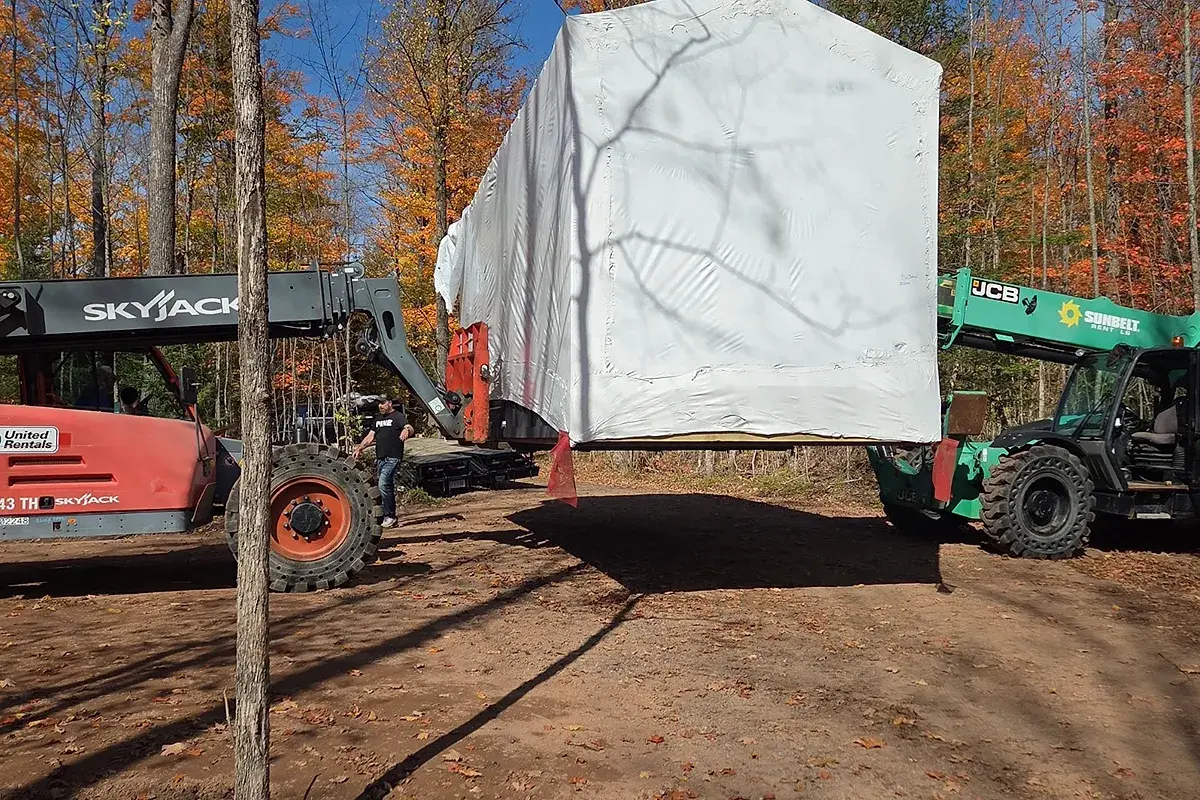
Yes, you can move inventory between seasons. A Pine space is a titled asset on a steel chassis, delivered and connected the way a recreational vehicle is, so it unhooks, goes back on the road, and re-sites at another property with nothing poured or welded in place. That is the answer most operators want, and it is a structural advantage of building on titled, movable equipment instead of foundation-fixed buildings.
The real answer is more disciplined: can is not should. A move carries an overwidth permit for each state crossed, a per-mile haul, several days the space earns nothing, and a re-siting at the far end. Repositioning pays only when the demand gap between the two properties is wide enough to cover all of that, and for many operators, adding a space where demand is already proven beats relocating one and leaving a hole behind. This paper gives you the honest transport math and a threshold you can run before you move anything.
Reposition a space only when the destination will earn meaningfully more per night, for long enough, to cover the permit, the haul, the days out of service, and the re-hookup, and the origin market is truly dead in that window. If either half is soft, add a space instead of moving one.
Why the inventory can move at all
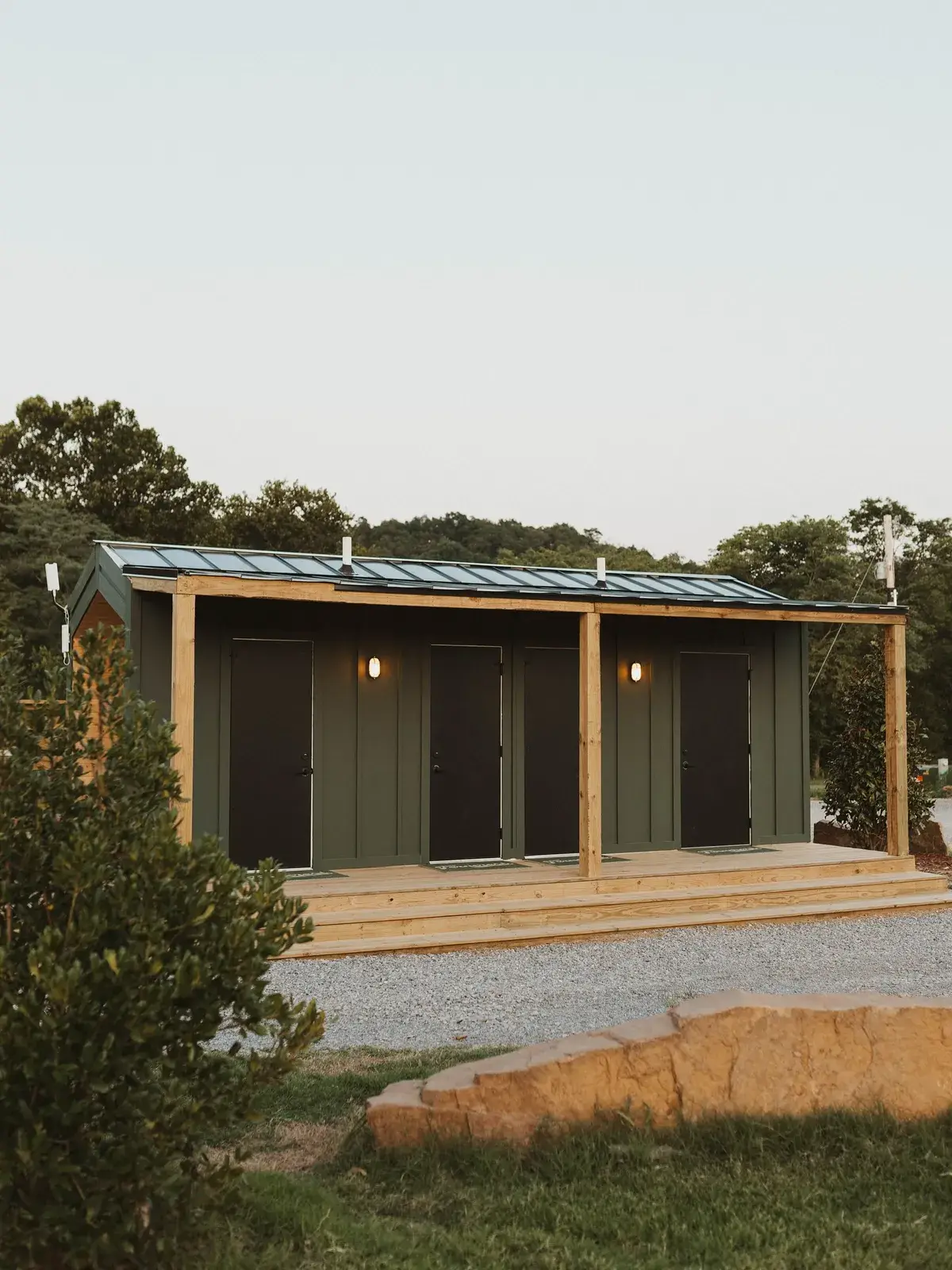
Everything downstream in this paper depends on one structural fact: a Pine space is titled as movable equipment on a steel chassis, not classified as real property attached to the ground. It arrives finished on its chassis and connects through a standard power pedestal, a water connection, and a sewer connection, the same way an RV does. There is no foundation to break, no septic field tied to the space, and no permanent utility run to cut. That is what makes a mobile cabin relocatable in a way a park model set on piers or a modular section craned onto a foundation is not.
The distinction matters legally as much as physically, and it is worth understanding before you plan a move, because how a space is titled and taxed follows from it. We cover that separately in how a titled asset is treated differently from real property. For repositioning, the practical takeaway is simple: because the space never became part of the land, moving it does not trigger a demolition, a foundation write-off, or a reassessment of a building. You are relocating equipment, and the road, not the county building department, is what governs the trip.
What the road actually requires
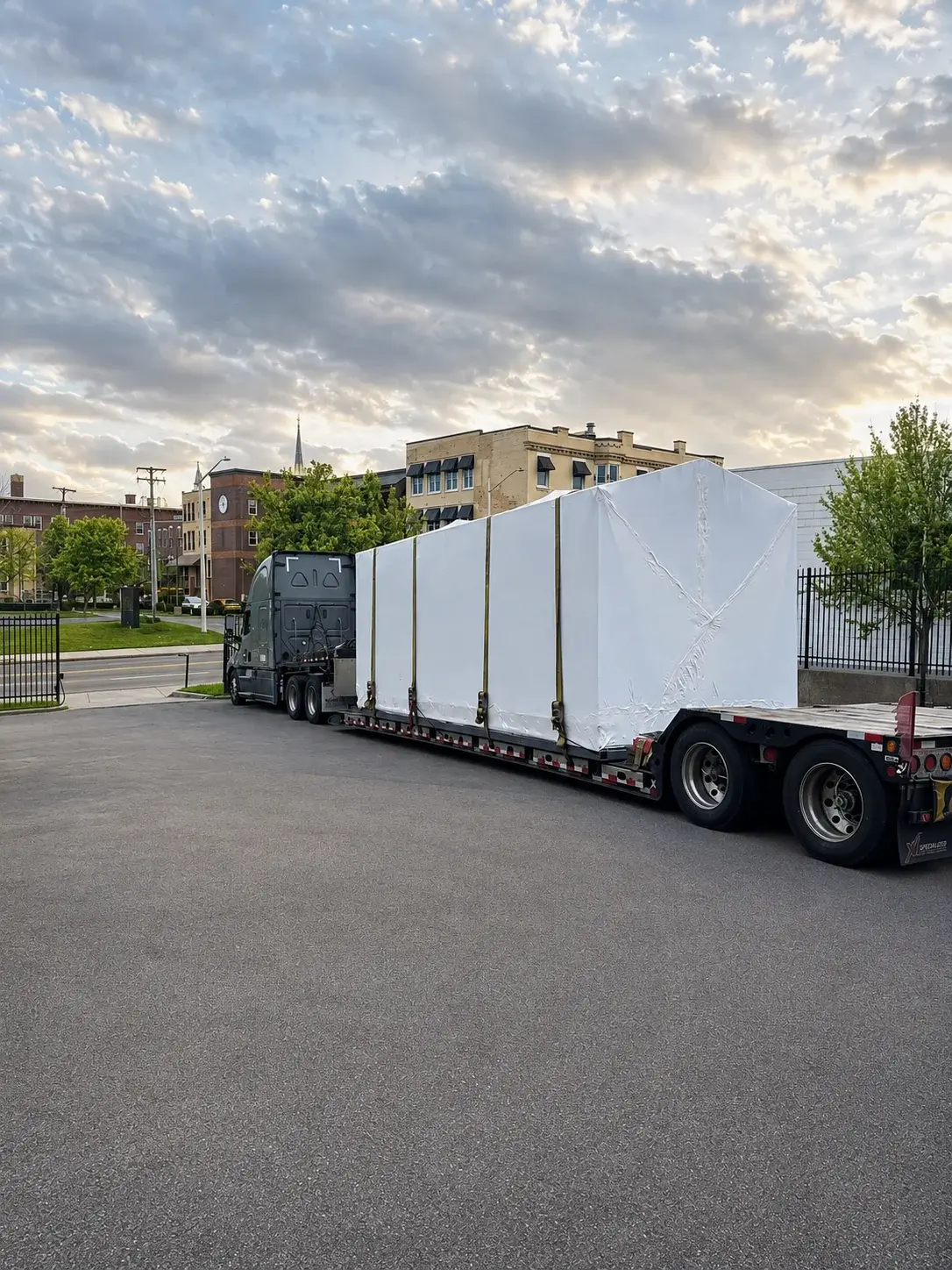
Once you decide to move a space, the trip is governed by federal size limits and state permits, and the numbers are knowable in advance. Federal rule caps commercial vehicles at 102 inches, which is 8 feet 6 inches, wide on the National Network, and a vehicle wider than that needs a special permit.[1] The same federal regulation explicitly lets a state grant special use permits to vehicles that exceed 102 inches, so overwidth movement is a routine, permitted activity, not an exception you have to argue for.[1] That federal framework is administered through state size and weight programs.[2]
In practice that splits Pine's lineup cleanly. A narrow space that travels at or under 8 feet 6 inches, like the Pod, often needs no width permit at all and hauls as a legal load. A wider space needs a single-trip overwidth permit in each state it crosses. That permit is straightforward to pull: state DOTs issue oversize and overweight permits for loads that exceed legal dimensions, many of them self-issued online for a set fee.[3]
Escorts, the pilot cars people picture behind a wide load, are a separate and wider threshold. Escort triggers are set state by state: many states require one escort only once a load passes roughly 12 feet wide, and the exact width, flag, and lighting rules differ from one state to the next, so a load that moves escort-free through one state can need one at the next line.[4] Whether a given Pine model clears those thresholds without an escort depends on its shipped width and the state, so check the two together; a space that does clear them has a real cost and scheduling advantage over relocating a wider park model or a modular section. Weight rarely binds for a single space: the federal Interstate ceiling is 80,000 pounds gross, with 20,000 pounds on a single axle and 34,000 on a tandem, and a single delivered space on a suitable trailer sits well under that.[5]
Permit fees, escort thresholds, and travel-time restrictions are set by each state you cross, and they do not average out. Price a specific move by pulling the actual rules for every state on the actual route before you commit, the same way you would for any oversize haul.
The real cost of a move
The mistake we watch operators make is pricing a move as a haul and stopping there. The haul is usually not the biggest number. A repositioning has four cost centers, and the quiet one, days out of service, is often the largest. Here is the full picture, set against the alternative of leaving the space where it is.
| Consideration | Repositioning an existing space | Leaving it in place |
|---|---|---|
| Permits | Overwidth permit fee per state crossed for a wider space; none for a narrow one | None |
| Escorts | Usually none for a narrower space, but verify each state against the shipped width; a wide load pays for pilot cars | None |
| Transport | Haul priced per loaded mile, higher for daylight-only overwidth travel and back-haul | None |
| Days out of service | Unbooked nights during teardown, transit, and re-siting at both ends, often the largest line | None; the space keeps earning where it sits |
| Re-siting and re-hookup | Leveling, plinth, and power, water, and sewer connections at the destination | Already sited and connected |
| Wear and insurance | Road wear on chassis and finishes; in-transit coverage for the move | Normal in-place operation only |
| Net effect | Relocates revenue from one property to another | Keeps revenue where it already exists |
Put illustrative numbers on it to see the shape. Suppose a space nets a few hundred dollars a night in peak season. A move that takes it out of service for a week to ten days across teardown, transit, and re-siting can quietly cost more in unbooked nights than the haul and permits combined. That is not an argument against moving. It is an argument for counting the days out of service as a first-class cost, because it changes the answer more often than the haul does. The time a space spends unbookable during a transition is the same clock we lay out in the order-to-first-guest timeline: setup and connection are fast for a Pine space, but they are not zero.
When repositioning actually pays
A move pays when the demand delta between origin and destination is large enough, and lasts long enough, to clear every cost in the table above. That reduces to two questions you can answer with real rate data, not a hunch.
First, how much more will the space earn at the destination? Not a little more; meaningfully more, per night, sustained across the window you are chasing. A lakeside cluster that goes quiet after Labor Day and a mountain or event market that peaks in the shoulder season is the classic case, because the two markets do not overlap and the rate difference in the window is real. Second, how dead is the origin in that same window? If the origin still books at a soft rate while the destination peaks, you are not freeing an idle asset, you are pulling a still-earning one and leaving a hole. The move pays only when both halves hold: a truly dead origin and a clearly stronger destination, for long enough that the extra nightly margin, multiplied by the booked nights you will actually capture, exceeds the permits, the haul, the days out of service, and the re-hookup.
Run that as a break-even. Add up the four cost centers for the specific route, divide by the extra margin per night the destination will earn over the origin, and you get the number of booked nights the move has to capture just to break even. If that number is a large share of the window, the move is fragile: one slow stretch of weather or bookings and it goes underwater. If it is a small share, the move is sound. Model it on your own rates before you commit, and treat the result as planning math rather than a promise, because occupancy in a new market is exactly what you cannot yet know.
Why adding often beats moving
Here is the counsel we give most portfolio operators, and it runs against the instinct that a movable asset should be moved: for many of you, adding a space is smarter than repositioning one. The reason is structural. A move relocates revenue. It fills a gap at the destination by opening one at the origin, so the fleet earns in a new place and stops earning in the old one, minus the cost of the trip. Adding a space where demand is already proven creates revenue instead of shuffling it, and it does so without stranding the property you would have pulled from.
Repositioning wins in a narrower band than it first appears: sharply seasonal, non-overlapping demand, where the origin market is truly dead in the exact window the destination is peaking, and the distance is short enough that the haul and the days out of service stay small. Outside that band, the math usually favors leaving each space where it earns and growing the fleet at the property that is short. Because a Pine space is standard inventory rather than a bespoke build, a second space is a repeatable order, not a construction project, which is what makes "add, don't move" a practical default rather than a slower one. You can size that decision property by property in Build & Price.
Running it as a fleet
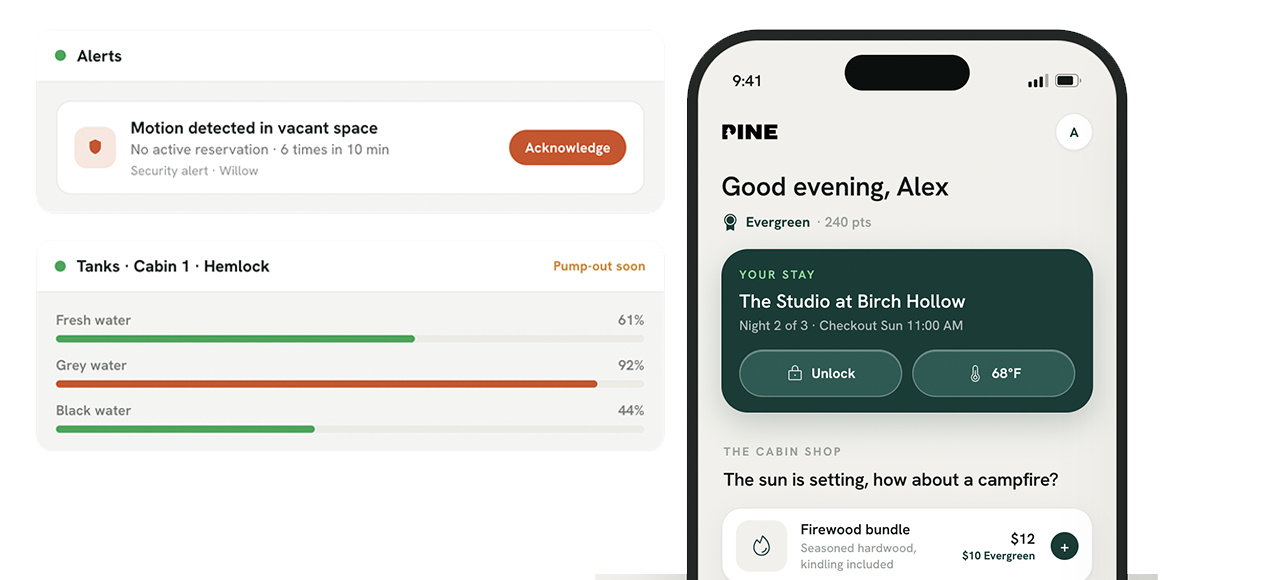
Whether you move a space or add one, a portfolio only stays manageable if you can see every space at once, across every property. That is the job Innkeeper does: one operator view spanning every space you own, wherever each one sits, with occupancy, device status, and service state per property in a single place. When a space changes properties, it reappears under its new location without a separate system to reconcile, which is what keeps a repositioning from turning into a bookkeeping mess.
Innkeeper is not a booking system and not a PMS, and that distinction matters for a portfolio. It reads the calendar you already run, on Airbnb, VRBO, Campspot, or any PMS or iCal feed, and manages the physical spaces from it. So rebalancing inventory does not mean re-platforming your bookings. Your reservations stay exactly where they are; Innkeeper simply follows the hardware to its new home and keeps the fleet visible as one operation. For a portfolio buyer weighing how movable inventory changes the operating model, the fuller argument lives on the funds and hospitality groups page.
A framework to run before you move anything
Pull this together into a sequence you can run before committing to a single move. It is deliberately conservative, because the failure mode we see is enthusiasm for the capability outrunning the arithmetic.
One, confirm the demand delta with real rate and occupancy data, not intuition: the destination has to earn meaningfully more per night, sustained, and the origin has to be truly dead in the same window. Two, price the route for real: pull the permit fees, escort thresholds, and travel-time rules for every state you would cross, since they are set locally and do not average out. Three, count the days out of service as a hard cost, at both ends, and put a dollar figure on the unbooked nights. Four, compute the break-even in booked nights and ask whether the window can realistically deliver them. Five, compare that against simply adding a space at the property that is short. If the move clears break-even with margin and the origin is truly idle, reposition. If it is close, or the origin still earns, add instead.
The capability is real, and it is a real advantage of building on titled, movable equipment: your inventory is not welded to one property for a decade. The discipline is knowing that a movable asset is worth moving only when the demand gap pays for the trip, and being honest with yourself about how often that is actually true.
Frequently asked questions
- Can you move a Pine space between properties?
- Yes. A Pine space is a titled asset on a steel chassis, delivered and connected like an RV, so it can be unhooked, hauled, and re-sited at another property. Nothing is poured or permanently wired in place. The real question is not whether a move is possible but whether it pays, because a move carries a permit, a haul, several days out of service, and a re-siting at the far end. Repositioning earns its keep only when the demand gap between the two properties is large enough to cover those costs.
- Do you need an oversize permit to move a cabin on a trailer?
- Usually yes for a wider space. Federal rules cap vehicles at 102 inches (8 feet 6 inches) wide on the National Network, and states issue special permits above that, so a space wider than that needs a single-trip overwidth permit in each state it crosses. A space at or under 8 feet 6 inches often needs no width permit at all. Escorts are a separate, wider threshold; whether a given Pine model stays under it depends on its shipped width and the state. Confirm the exact permit and escort rules with each state DOT on your route.
- When does an oversize load need a pilot car or escort?
- Escort thresholds are set by each state and are wider than the permit threshold. Many states require one escort once a load passes roughly 12 feet wide and two escorts around 14 feet, but the exact trigger varies, so a load legal to move with no escort in one state can require one in the next. Pine's narrower spaces travel under those widths; check the shipped width of the model you are moving against each state's threshold before you assume no escort. Verify with the DOT of every state on the route.
- How much does it cost to reposition a space?
- Budget for four things, not one: the permit fees for each state crossed, the haul (priced per loaded mile, higher for an overwidth load that needs day-only travel), the days the space earns nothing while it moves and re-sites, and the re-hookup at the destination. For a short in-region move the haul may be modest, but the lost-revenue days are often the largest line, which is why moving a space over a long distance rarely pays unless the destination commands a much higher rate.
- Is it smarter to move a space or add another one?
- For most operators, adding a space is smarter than moving one. A move leaves a hole at the origin property while it fills a gap at the destination, so you have paid to relocate revenue rather than create it. Adding capacity where demand is proven grows the fleet without stranding the property you pulled from. Repositioning makes sense mainly for sharply seasonal, non-overlapping demand, where the origin market is truly dead in the window the destination is peaking.
- How do you keep track of spaces across multiple properties?
- Pine Innkeeper gives one operator view across every space in a portfolio, wherever each one sits, showing occupancy, device status, and service state per property. Innkeeper is not a booking system or PMS. It reads the calendar you already run, on Airbnb, VRBO, Campspot, or any PMS, and manages the physical spaces from it, so a repositioned space shows up under its new property without a separate system to reconcile.
Sources
- 23 CFR § 658.15, Width. Legal Information Institute, Cornell Law School.
- Federal Size Regulations for Commercial Motor Vehicles. Federal Highway Administration, U.S. Department of Transportation.
- Commercial vehicle permits: oversize and overweight loads. Washington State Department of Transportation.
- Escort and equipment requirements for oversize loads. Texas Department of Motor Vehicles.
- 23 CFR § 658.17, Weight. Legal Information Institute, Cornell Law School.
This paper draws on Pine’s experience building, titling, delivering, and re-siting mobile spaces across multiple states and full seasons, combined with federal and state transport regulations cited above. Every permit, width, and weight figure is a government or legal-source number; every cost figure is framed as illustrative and depends on your route, distances, and rates. Permit, escort, and weight rules are set by each state you cross, so confirm them with the relevant state DOT before any move. Pine does not provide tax, legal, or investment advice; the economic thresholds here are structural planning guidance, not a forecast of returns.
Working through this for a specific property?
Build & Price