Pine whitepaper
Park model or stick-built: which one actually pencils?
A manufacturer’s honest, lender’s-eye comparison of the two traditional ways to add lodging, a park model RV or a site-built cabin, across timeline, permitting, cost of ownership, mobility, titling, and resale. Then a third path.
The short answer, then the real one
If you are choosing between a park model RV and a site-built cabin to add lodging, run the comparison the way a lender would: not on the sticker price, but on how fast the capacity earns, what the permitting process costs you in time, how the structure is titled and therefore financed, and whether the decision is reversible. On those axes the park model tends to win on speed and flexibility, the site-built cabin wins on size and permanence, and the sticker price, the number most buyers anchor on, is the least useful figure in the whole comparison.
A park model is titled as a vehicle (personal property, movable, financed like an asset). A site-built cabin is real property (fixed to land, permitted as a dwelling, financed like a mortgage). Almost every difference below, timeline, permits, financing, resale, follows from that one line.
We build the third kind of structure, so read the rest of this knowing that: Pine delivers titled, movable spaces, and part of the reason we can be honest about the two traditional paths is that we have watched buyers arrive at us after pricing both. Below we define the two categories precisely, walk each of the six dimensions that actually decide it, and then lay the third path alongside them in a single table you can hand to whoever signs off on the money.
The two traditional paths, defined
Most of the confusion in this decision comes from loose vocabulary, so start with what each path actually is. A park model RV is a recreational vehicle: the motor-vehicle administrators who title these define it as a recreational vehicle built on a single chassis, mounted on wheels, primarily designed for temporary living quarters for recreation, camping, or seasonal use, with a gross area not exceeding 400 square feet in the set-up mode.[1] The same policy ties the category to a manufacturer's certification to the park model standard, and the structure is titled as a vehicle, not as a house. That is the category, not a knock on it. It is also the category Pine is most often compared with, which is why our park model comparison page leads with it rather than against it; where Pine differs from it is laid out below.
Federal housing policy draws the same line from the other direction. HUD regulates manufactured homes to a national construction and safety standard, built on a permanent chassis and intended as housing, and it expressly exempts recreational vehicles from that standard.[2] A park model RV sits on the vehicle side of that exemption. The practical takeaway: a park model is not a house in the eyes of the code, and trying to make it behave like one, by hard-plumbing it, setting it on a permanent foundation, or occupying it year-round as a primary residence, is exactly what reopens the questions the vehicle classification was meant to avoid.
A site-built cabin, sometimes called stick-built, is the opposite: a dwelling constructed on your property to the residential building code. In most of the country that is the International Residential Code, the model code for one- and two-family dwellings that carries the building, plumbing, mechanical, and electrical requirements a permanent home must meet.[3] It is real property from the first footing. Everything good about it, unlimited size, architectural freedom, permanence, and everything expensive about it, foundation, on-property systems, permits, inspections, and a construction season, comes from that single fact.
Timeline: a season, or a season lost
The first dimension a lender cares about is when the asset starts earning, and this is where the two paths diverge most sharply. A site-built cabin is a construction project: design and engineering, a permit application, a foundation, framing, rough-in and finish of every system, then the inspections that gate each stage. Measured honestly, that is months, and for a business that only sells warm-weather nights, a build that spans the season does not merely delay revenue, it deletes a year of it. The lost season never shows up on the construction quote, which is precisely why it gets underweighted at the table.
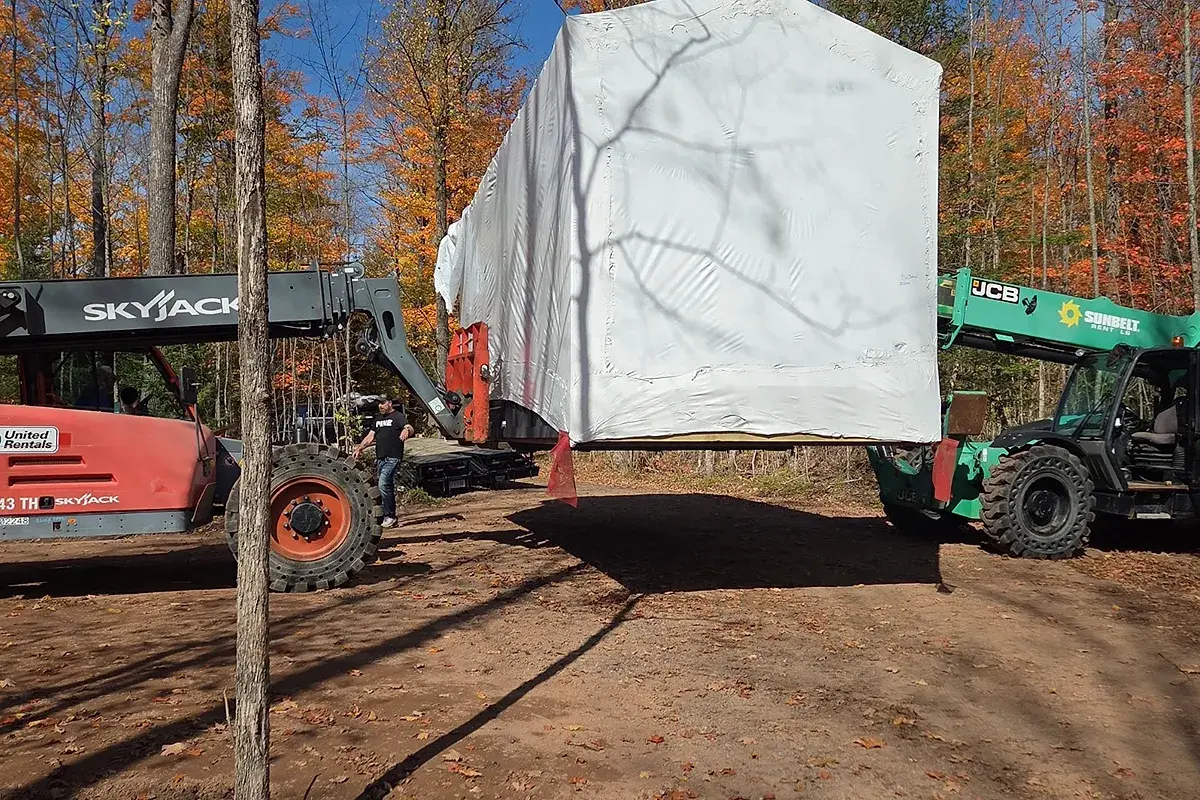
A factory-built structure inverts the timeline by doing the build somewhere else. A park model or a delivered mobile space arrives finished, because the framing, systems, and finish already happened in a shop while your property sat untouched. What remains on your grounds is placement and hookup, not construction. The campgrounds and operators we have delivered to consistently describe the same before-and-after: the structure that would have cost them a season off the calendar was instead in service within days of arriving. That is the entire timeline argument for a movable structure, and it is a strong one, but it is not free of caveats, which is what the next dimension is about.
Permitting: what each path triggers
Permitting is where the titling distinction stops being abstract. A site-built cabin needs a building permit for the structure itself, because it is a regulated dwelling under the residential code, and that permit pulls in plan review, foundation and framing inspections, and sign-off on every system.[3] None of that is optional, and none of it is fast. It is the right process for a permanent home; it is simply a heavy process to trigger for a small lodging structure you want earning this year.
A titled, movable structure generally does not need a building permit for the structure itself, because it is not classified as a dwelling. What it does need is placement approval: your township or county still governs zoning, setbacks, density, and how the structure connects to power, water, and waste. That is a genuinely lighter process in most places, but it is not nothing, and the honest counsel we give every buyer is to ask the placement question before ordering anything. We wrote a companion guide on exactly how a titled asset is treated differently from real property, because the classification is the hinge the whole permitting picture swings on. The failure mode to avoid is the one that quietly converts a movable structure into a permanent one: pour a foundation under it or hard-plumb it into septic, and a local authority can reclassify it as a permanent structure, which reopens the full permitting process you chose the mobile path to skip.
The cost of ownership, not the sticker
The number every buyer anchors on is the price of the structure, and it is the wrong anchor. The site-built quote almost never includes the foundation, the trenching and connection of utilities across your property, the permit and engineering fees, or the general-contractor overhead on all of it, and it certainly does not include the revenue foregone while the build runs. Add those back and the site-built path routinely costs a multiple of its headline number. A park model or a delivered space carries fewer of those hidden lines, because the build is already done and the connection is RV-style rather than trenched infrastructure, though it is not zero: you still need a prepared pad, a power pedestal, and water and waste connections at the location.
Rather than invent figures, we will point you at the worked version. Our guide on what it actually costs to add cabins to a campground lays out the line items the sticker leaves off, and for a specific configuration and delivery distance, Build & Price shows the transparent, distance-based number for a Pine space. The discipline to carry into either tool is the same one a lender uses: compare total cost to place-and-operate, not structure to structure, and put the value of a saved season on the same page as the capital.
Titling and financing: the quiet fork in the road
How a structure is titled decides how it is financed, and the two paths sit on opposite sides of that fork. A site-built cabin is real property and is typically financed as such, with the longer terms and lower rates a real-estate mortgage carries. A park model RV, or any titled movable structure, is personal property, financed more like a vehicle or a piece of equipment. The Consumer Financial Protection Bureau documented how consequential that split is in the closely related manufactured-housing market: whether a structure is titled as personal property or as real property drives the financing available, and the bureau found personal-property (chattel) loans carried shorter terms and materially higher rates than real-property mortgages on otherwise comparable homes.[4]
We cite that to illustrate the mechanism, not to predict your rate: the CFPB’s figures are for manufactured homes, not park models or Pine spaces, and your terms will depend on your lender, your credit, and your structure. The structural fact is the durable one. A movable, titled asset is generally financed and treated as personal property; a foundation-built cabin is financed and treated as real property; and the right path depends on which of those your balance sheet, your lender, and your tax situation actually want. This is squarely a question for your own advisors. Pine does not provide tax, legal, or investment advice, and the honest move here is to take the titling distinction to the people who do.
Mobility, and whether you can undo the decision
The most underrated dimension is reversibility. A site-built cabin is a permanent bet on one spot: you are sizing and siting a building today against a ten-year guess about how your property will grow, and if the guess is wrong in either direction, correcting it means demolition or a second build. A titled, movable structure keeps the decision open. It stays on its chassis, so it can be repositioned as you learn which parts of your grounds guests actually book, added to when demand proves out, or relocated across a portfolio when one property is full and another is not.
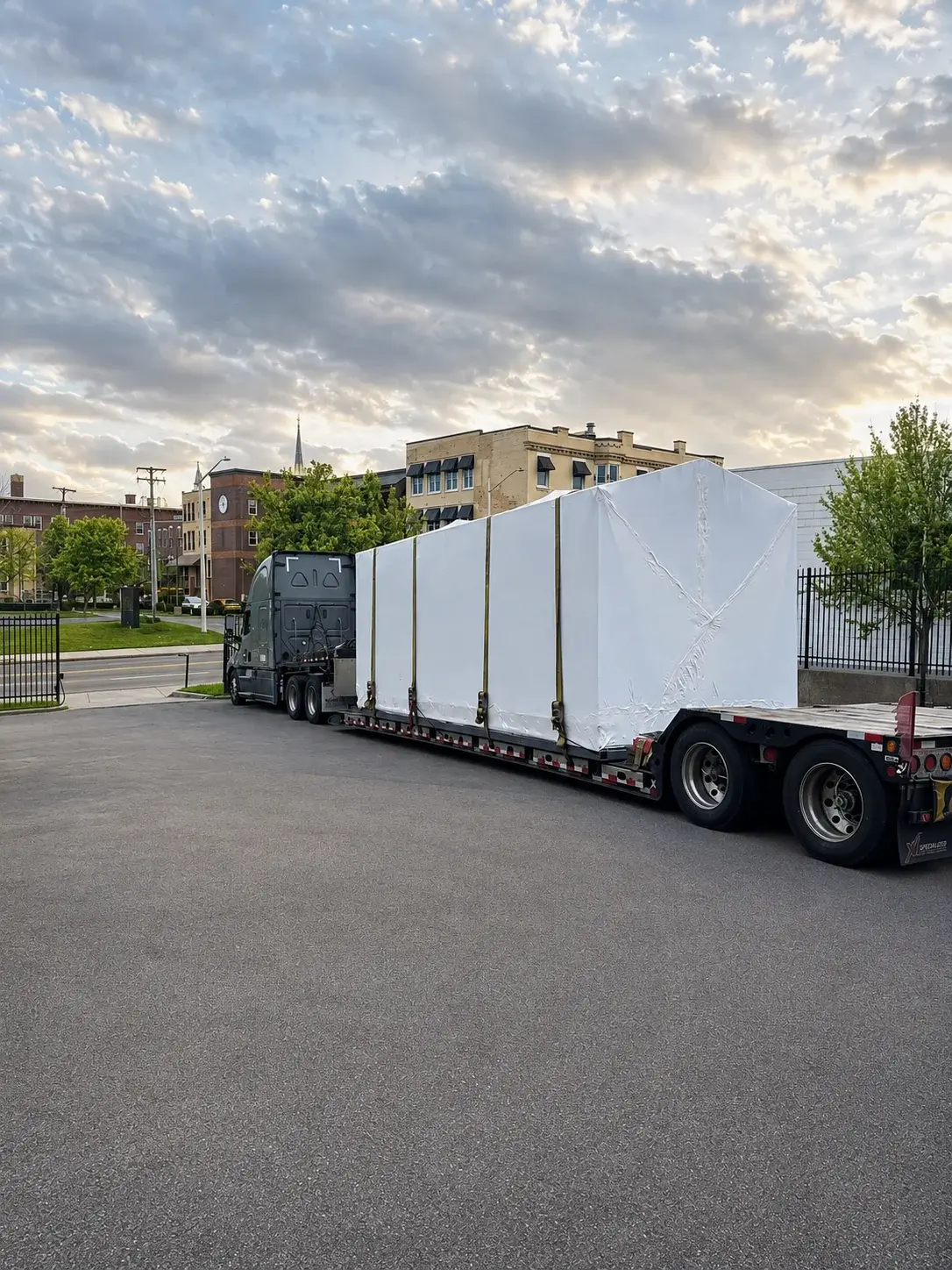
Mobility does come with real logistics, and we will not pretend otherwise. Anything wider than 8.5 feet is an oversize load on public roads and needs a transport permit, and at greater widths the states require escort vehicles front or rear.[5] That is true of a wide park model and of our wider spaces alike; a narrow structure moves without the escort apparatus, a wide one moves under a standard oversize permit. The distinction that matters is not that moving is effortless, it is that moving is possible. A foundation is a one-way door. A titled asset on a chassis is not, and for operators thinking in fleets rather than single buildings, that reversibility is the whole point, which is why we address it directly for funds and hospitality groups.
A third path, and the full comparison
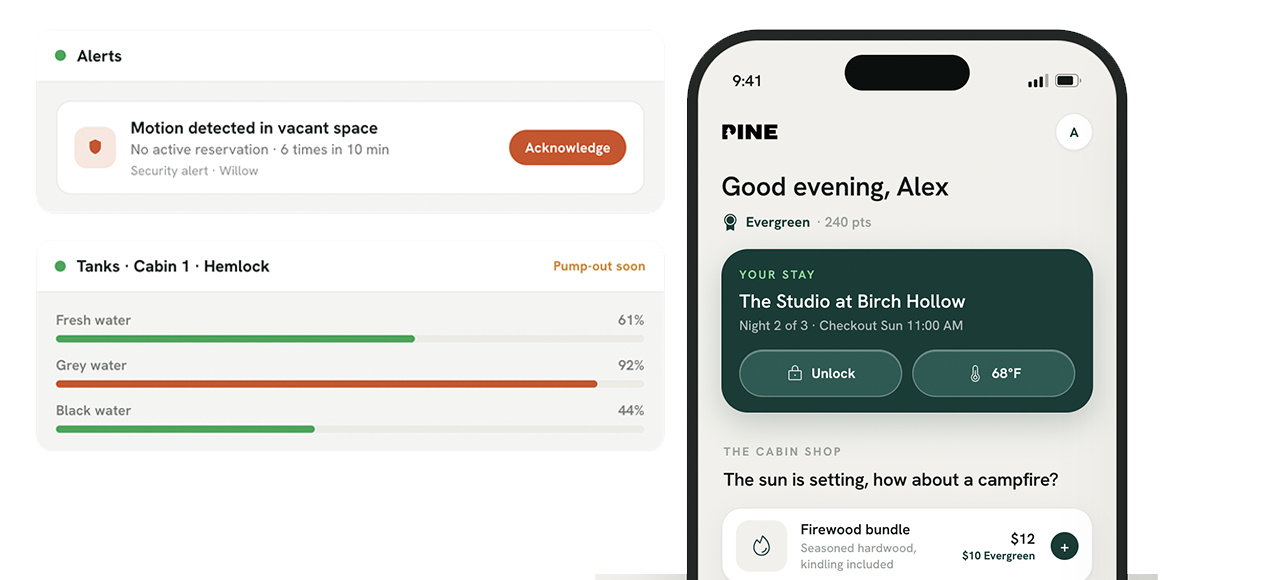
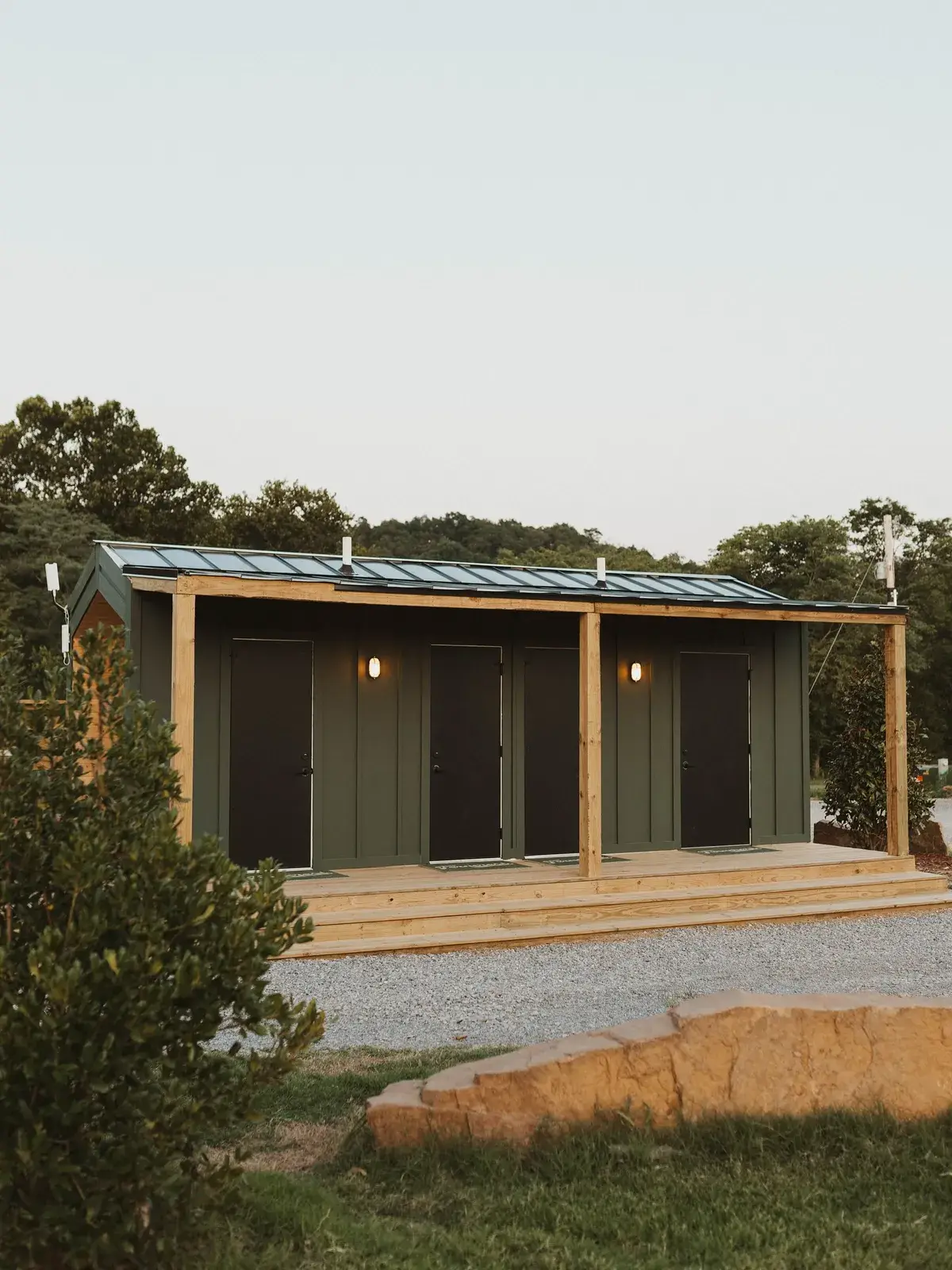
Set against those two, here is where Pine sits, stated plainly so you can weigh it rather than take it on faith. A Pine space keeps the honest advantages of the park model category, it is a titled, movable structure on a steel chassis that connects like an RV and needs no foundation, septic, or building permit for the structure, and it changes the path around the structure in three ways. It is delivered and set by Pine as a complete, guest-ready space rather than bought off a dealer lot and placed by you. It is built for operators running upscale outdoor hospitality rather than for seasonal owner-occupancy in an RV resort. And the technology that runs the physical property is built in, not bolted on afterward. Pine spaces are built and titled as movable equipment on a steel chassis; they are not RVIA or ANSI certified, and we never describe them that way.
The table reads across the six dimensions above. Confirm the classification, permit, and financing rows against your own jurisdiction, lender, and advisors; they are the rows most likely to vary locally.
| Dimension | Park model RV | Site-built cabin | Pine’s titled-mobile path |
|---|---|---|---|
| Time to first guest | Fast; arrives finished, then placed | Months; a construction season on your property | Fast; delivered finished, connects and earns in days |
| Permitting for the structure | No building permit for the structure; placement approval applies | Full building permit, plan review, staged inspections | No building permit for the structure; placement approval applies |
| Site work | Pad, pedestal, RV-style hookups | Foundation, trenched utilities, on-property systems | Pad, pedestal, RV-style hookups; no foundation or septic |
| How it is titled | Vehicle, personal property | Real property, fixed to land | Titled RV asset, personal property (movable equipment) |
| Financing pattern | Personal-property terms | Real-estate mortgage terms | Personal-property terms; confirm with your lender |
| Mobility and reversibility | Relocatable; oversize transport if wide | Permanent; a one-way decision | Relocatable; oversize transport handled in delivery |
| Finish and intended use | Finished; typically seasonal owner-occupancy in an RV resort | Custom, permanent, any size | Delivered and set guest-ready for upscale outdoor hospitality |
| Technology | Added aftermarket, if at all | Added aftermarket, if at all | Built in (smart locks, sensors, monitoring) |
The honest limits belong in the table’s shadow. A site-built cabin still wins when you need size or permanence a 400-square-foot footprint cannot give, or when the value you want is literally the appreciation of an improved piece of real estate. The movable path wins when speed, reversibility, and keeping capacity in step with demand matter more than square footage, which is the situation most operators expanding a park or standing up a new property are actually in. If that is you, our mobile cabin lineup is where the specific footprints and finishes live.
How to run the comparison for your property
Reduce the decision to the questions a lender would ask and it gets simpler. First, when does this need to be earning? If the answer is this season, a construction timeline is disqualifying on its own. Second, is the location certain for a decade, or is your read on which part of the property guests want still forming? Certainty favors permanence; anything less favors a reversible asset. Third, what does your balance sheet want to own, real property or titled equipment? Take that one to your accountant, because it drives financing and tax treatment and it is not a question a manufacturer should answer for you.
Answer those three honestly and the path usually chooses itself. For an operator adding capacity to a working park on a seasonal clock, the movable, titled path wins on the dimensions that decide it, and the sticker price they started with turns out to have been the wrong place to look. If that describes your property, the practical next steps are our guidance for campgrounds and resorts, and, when you want a real number for a real configuration, Build & Price. The comparison is not park model versus cabin. It is which structure gets you rentable capacity fastest, keeps the decision reversible, and finances in the way your balance sheet actually wants.
Frequently asked questions
- Which is cheaper, a park model or a stick-built cabin?
- On the sticker alone, a park model RV usually looks cheaper than a comparable site-built cabin, because a site-built cabin’s price does not include the foundation, the utility trenching, the permits, or the months of labor that a permanent structure needs before it can host anyone. The honest comparison is total cost of ownership: the structure, plus the site work, plus the financing terms your titling determines, plus the revenue you do or do not earn during the build. Once you add the parts a per-square-foot quote leaves out, the two paths often cost far more alike than they first appear, and the faster path frequently wins on return.
- How long does each path take before it can host a guest?
- A site-built cabin is a construction project measured in months: design, permits, foundation, framing, systems, inspections, then finish work. A factory-built structure that arrives finished and connects like an RV can be earning within days of delivery, because the build already happened off your property. For a seasonal business the difference is not a scheduling detail, it is whether the capacity earns this season or next.
- Is a park model RV titled as personal property or real property?
- A park model RV is a recreational vehicle: it is built on a single chassis on wheels, kept under 400 square feet, and titled as a vehicle, which is personal property, not real property. A site-built cabin is real property, fixed to land and taxed and financed as such. That titling difference drives almost everything downstream, from how you finance it to how you sell it, so confirm the classification your jurisdiction and lender will apply before you commit. Pine does not provide tax, legal, or investment advice.
- Do I need a building permit for a park model or a mobile cabin?
- A site-built cabin needs a building permit for the structure, because it is regulated as a dwelling under the residential building code. A titled, movable structure that connects through standard RV-style power, water, and sewer connections generally does not need a building permit for the structure itself, though your local authority still governs placement, zoning, and hookups and always has the final say. Ask your township the placement question directly before you order anything.
- Can I move a park model or a stick-built cabin after it is placed?
- A site-built cabin does not move; it is built on a foundation and stays where you put it, so a wrong guess about which part of your property guests actually want is expensive to correct. A park model or a titled mobile structure can be relocated, since it stays on its chassis, though moving anything over 8.5 feet wide on public roads requires an oversize transport permit and, at greater widths, escort vehicles. The point is that a titled, movable asset keeps the decision reversible in a way a foundation never does.
- How is a Pine space different from a park model RV?
- A Pine space shares the honest advantages of the park model RV category, it is a titled, movable structure on a steel chassis that connects like an RV and needs no foundation, and differs on the path around it: it is delivered and set by Pine as a complete, guest-ready space, it is built for operators running upscale outdoor hospitality rather than for seasonal owner-occupancy in an RV resort, and its onboard technology is built in rather than added later. Pine spaces are built and titled as movable equipment; they are not RVIA or ANSI certified, and we do not describe them that way.
- Which path holds its value better for resale?
- A site-built cabin is tied to its land, so its value moves with the real-estate market and it cannot be sold separately from the property. A titled, movable structure holds value more like a vehicle or a piece of equipment: it depreciates on its own schedule, but it can be sold, financed, or relocated independently of any one property, which matters if your plans change. Neither is universally better; they are different kinds of asset, and which one fits depends on whether you are buying a place or building a portfolio.
Sources
- Policy position on the recreational park trailer (park model RV) category. American Association of Motor Vehicle Administrators.
- Office of Manufactured Housing Programs: federal construction standards and the recreational-vehicle exemption. U.S. Department of Housing and Urban Development.
- International Residential Code: the model building code for one- and two-family dwellings. International Code Council.
- Manufactured Housing Finance: New Insights from the Home Mortgage Disclosure Act. Consumer Financial Protection Bureau.
- Escort and equipment requirements for oversize and overwidth loads. Texas Department of Motor Vehicles.
This paper draws on Pine’s experience manufacturing and delivering titled, movable spaces, set against the traditional site-built and park model RV paths as buyers actually encounter them, and against the cited government, standards, and titling sources. Category definitions, code, titling, and financing rules are jurisdiction-specific and change; confirm every classification, permit, and financing question with your local authority, your lender, and your own advisors before you commit. Pine does not provide tax, legal, or investment advice.
Working through this for a specific property?
Build & Price